Moon Was Supposed to Watch the Show. Then She Closed It.
At The Musa Showroom x Revive Fashion Week
The French-Korean rapper arrived in New York as a VIP guest and unexpectedly became the final look of the night.
There is a particular kind of energy that exists around New York Fashion Week, where the distinction between the people watching the show and the people creating the moment can disappear without warning. A guest can arrive expecting to sit in the audience and leave having become part of the presentation itself. That was exactly what happened when French-Korean rapper Moon joined The Musa Showroom x Revive Fashion Week during New York Fashion Week.
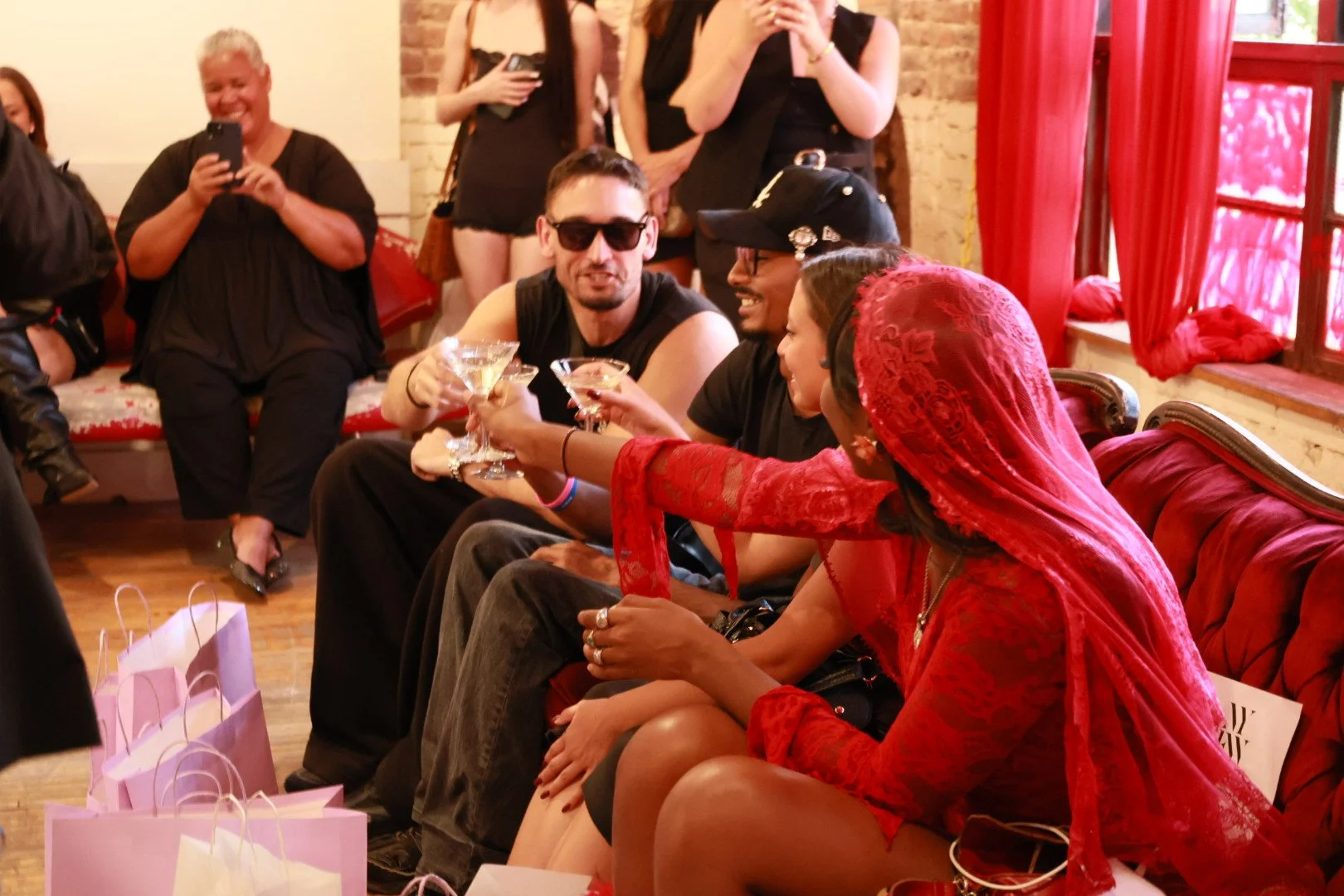
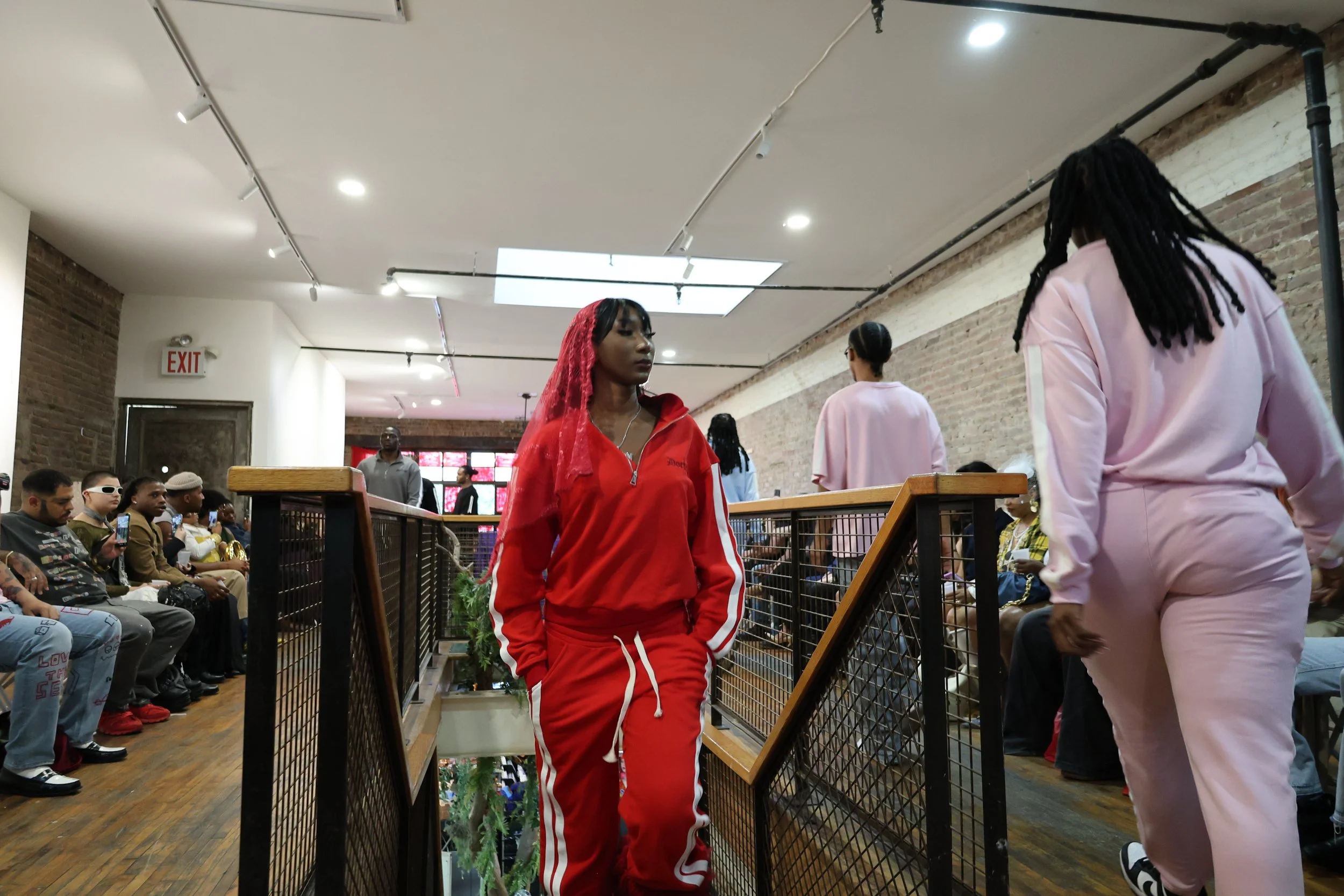
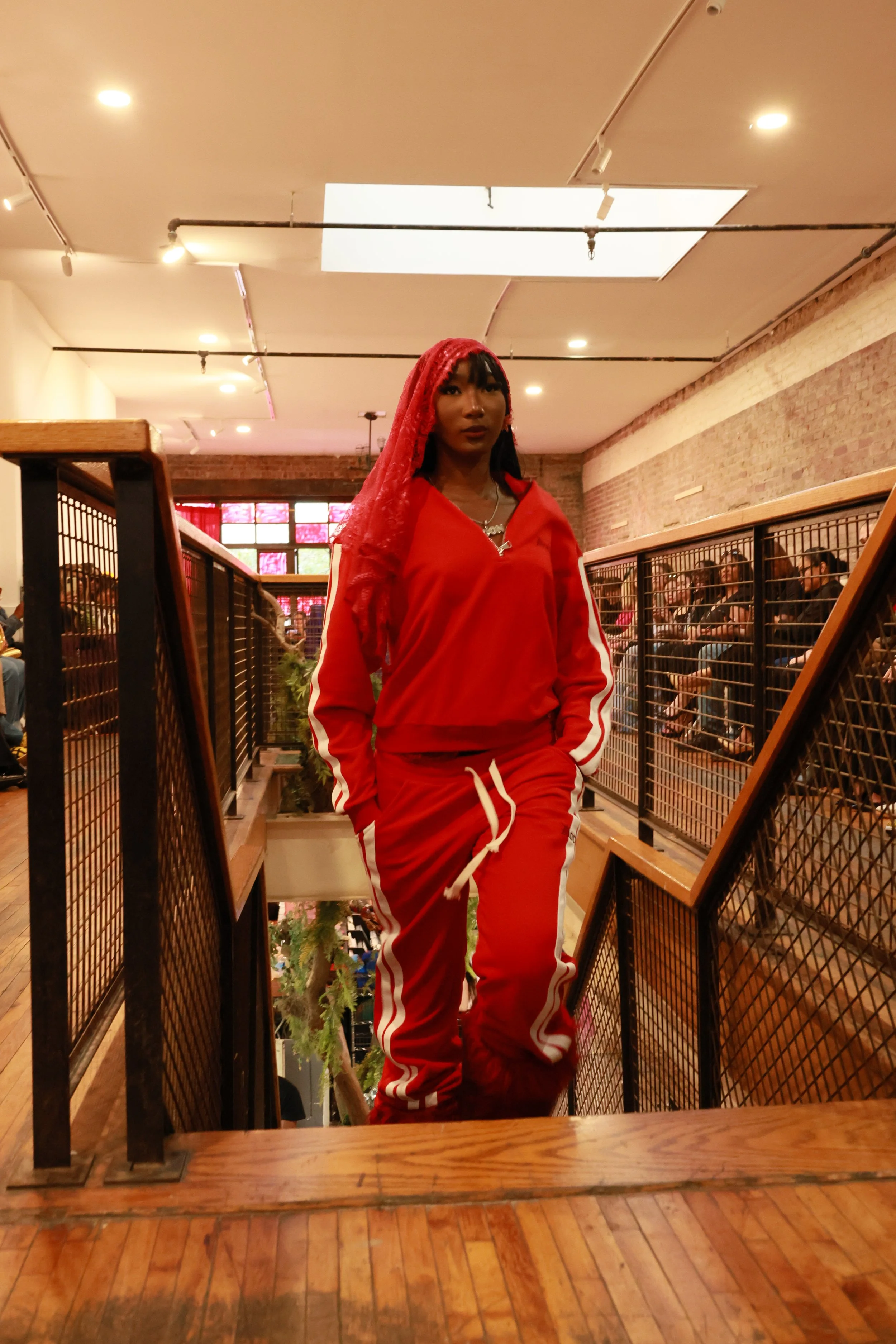
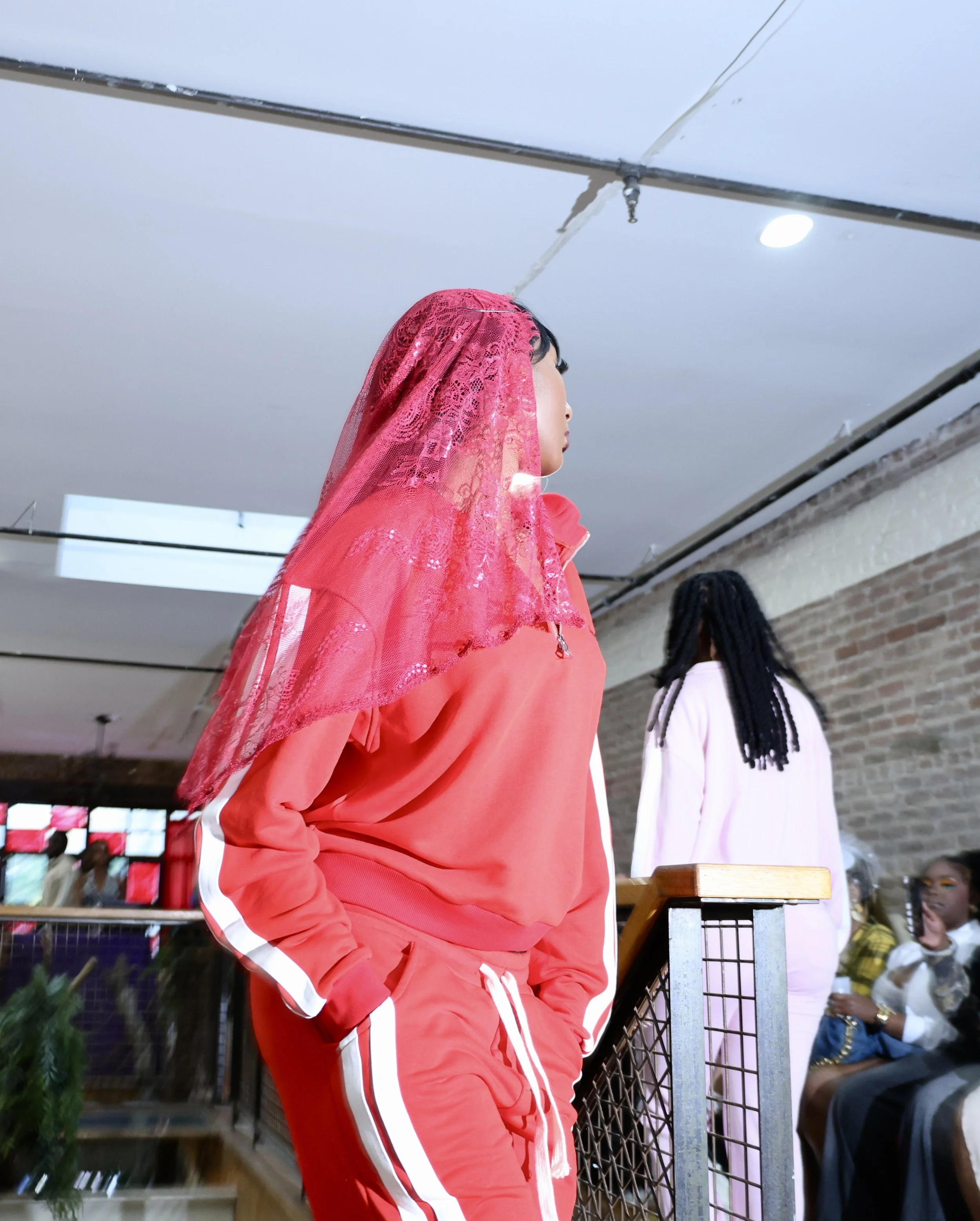
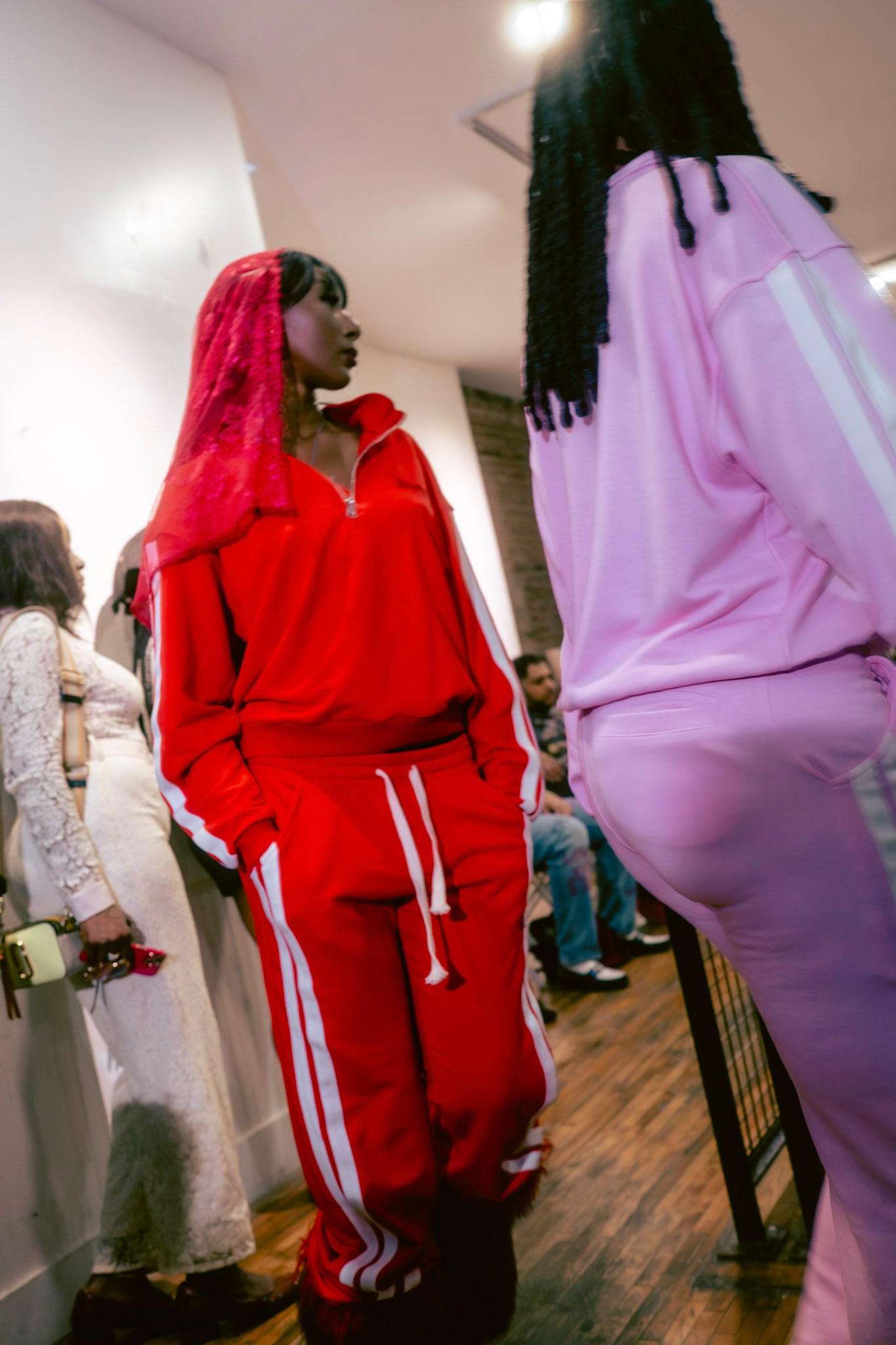
Moon and her team were hosted in the VIP area through the Musa Creator Circle, surrounded by the designers, stylists, creators, artists, industry professionals, and cultural figures who made up the room. She arrived as an artist attending Fashion Week, but as the presentation progressed, the evening took a turn that was not sitting on anyone's official call sheet. Moon made a surprise appearance on the runway and closed the show in the final look from The Stylist Collective featuring Doctrine Denim.
It was unexpected, but it did not feel out of place. In fact, once Moon stepped onto the runway, the moment made an almost suspicious amount of sense.
This is, after all, New York. It is a city where music and fashion have been borrowing from one another for decades, where a rapper can become a fashion reference before the fashion industry has decided to call them one, and where the most memorable moments are often the ones that were not overproduced to death before they happened.
Moon simply became part of the night.
When the Guest Becomes the Finale
Moon's presence at the event was never meant to be reduced to a front-row appearance. The Musa Creator Circle was created to place artists, creators, media, influencers, and cultural tastemakers inside the same environment as the designers and brands participating in the showroom's Fashion Week presentations. Rather than treating those communities as separate audiences, The Musa Showroom has built its events around the idea that the people experiencing fashion are often just as important to the culture around it as the people presenting it.
Moon and her team were welcomed into that environment as VIP guests, and there was already a natural relationship between the world she occupies as a recording artist and the world being built around the runway. She is a musician whose identity exists across cultures and industries, and her presence in a room centered around independent fashion, styling, and creative expression did not require much explanation.
Then the runway needed its final look.
Moon walked.
What made the moment particularly effective was its lack of ceremony. There was no need for a long introduction or a manufactured celebrity reveal. She simply appeared in the final look from The Stylist Collective featuring Doctrine Denim, and the room understood the significance as it happened. Fashion Week is full of people trying very hard to create an unforgettable moment. Every so often, one actually arrives on its own.
Moon's walk was one of those moments.
Doctrine Denim Carries a Hip-Hop History of Its Own
The clothing made the appearance even more significant.
Doctrine Denim, part of the Modernbrands Group, sits within a family of streetwear brands with a long relationship to hip-hop and celebrity culture. The group's history reaches back to the 1980s, a period when streetwear was becoming increasingly intertwined with the visual identity of hip-hop and when artists were using clothing to establish a language that extended far beyond the music itself.
Some of the artists associated with the group's brands represent the foundation of that history. Big Daddy Kane, Big L, and Shaquile O’Neil are among the celebrated names connected to a generation of recording artists who helped establish hip-hop as a cultural force whose influence could not be confined to the record industry. Their relationship with fashion was not simply about wearing something recognizable. Clothing became part of the image, the attitude, the performance, and the larger world those artists were building around their music.
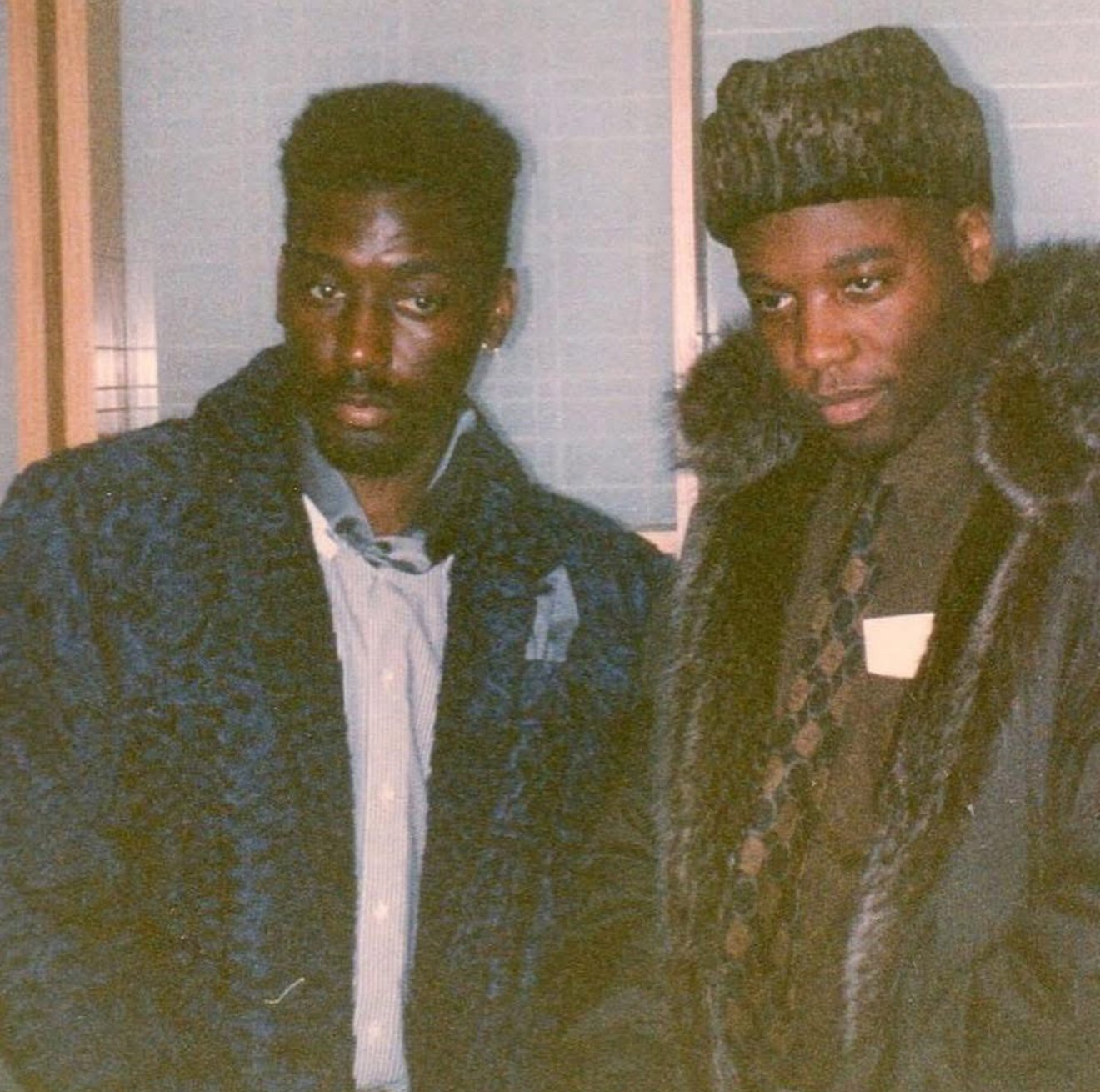
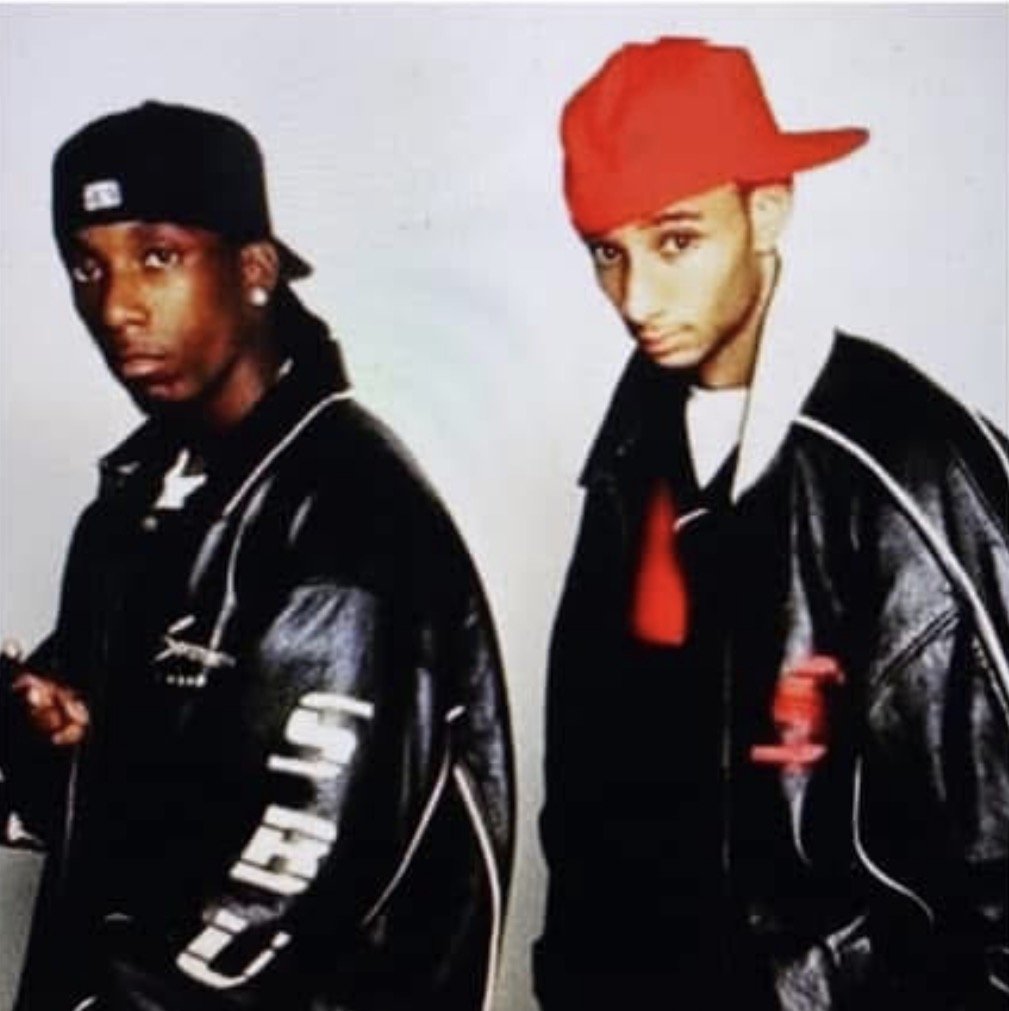
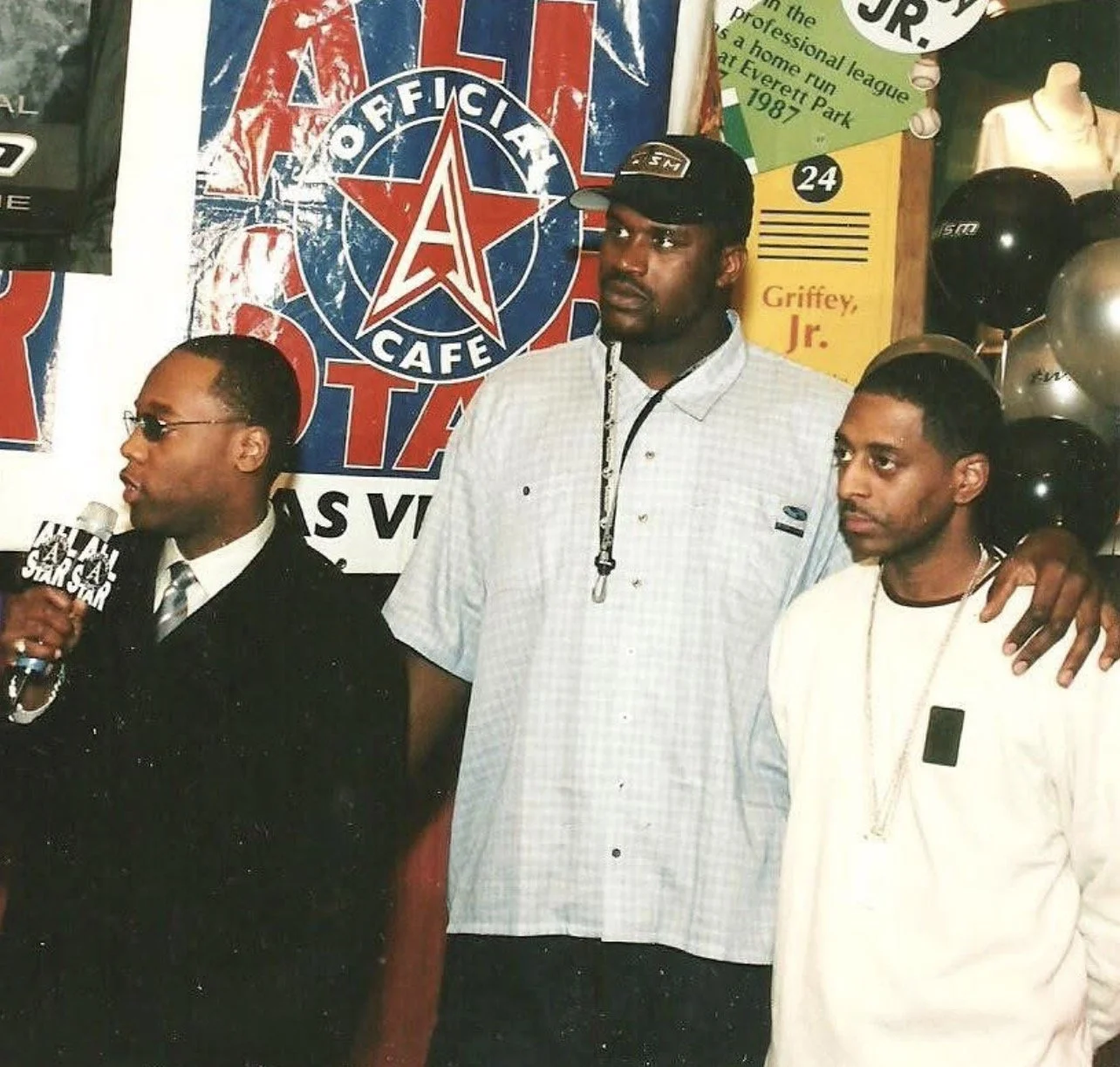
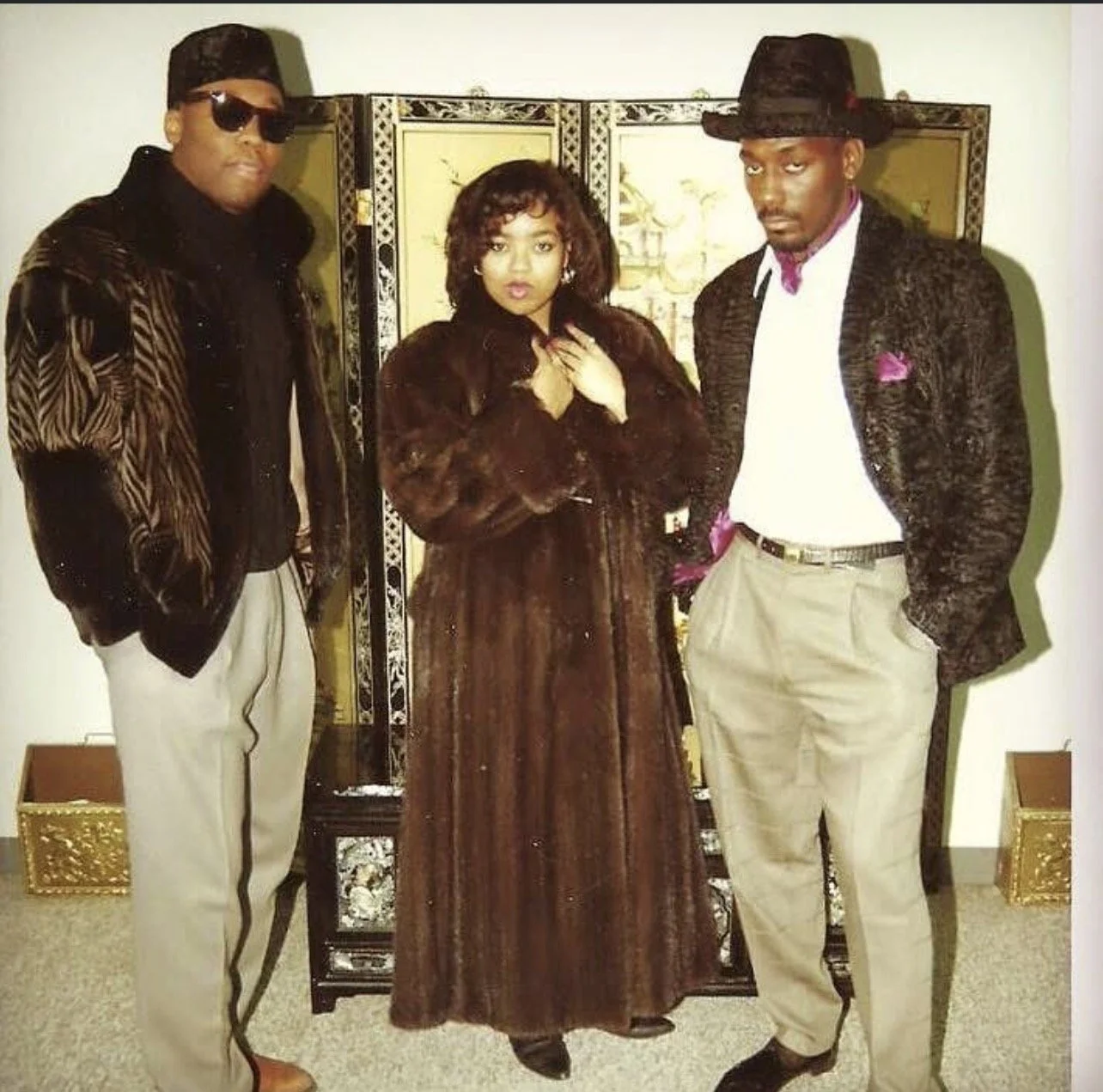
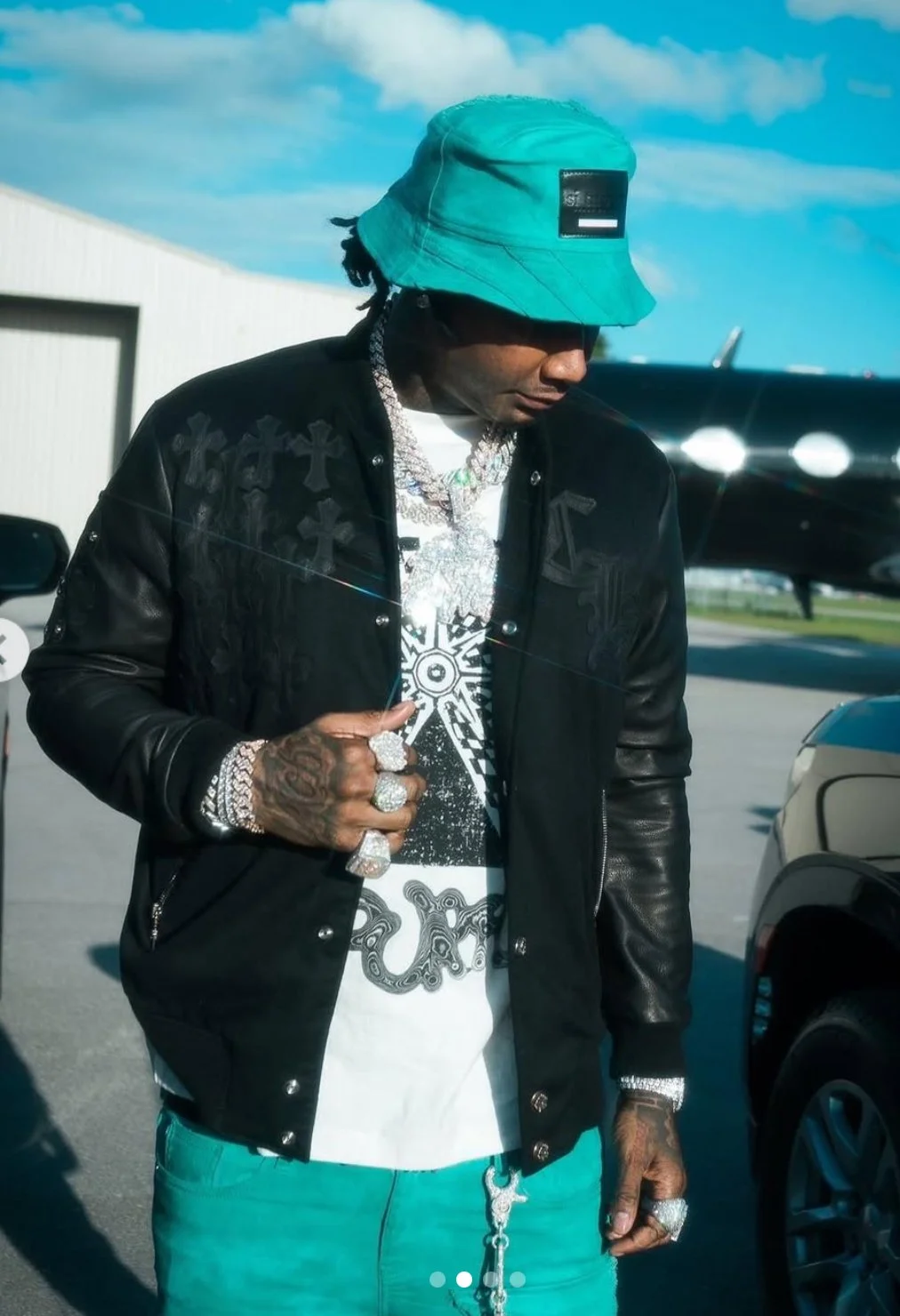
That lineage has continued into the current generation. Modernbrands Group's streetwear brands have been worn by contemporary artists including Rick Ross, Fivio Foreign, French Montana, Moneybagg Yo, Gunna, and others whose careers demonstrate just how deeply rap and fashion now operate within the same cultural ecosystem.
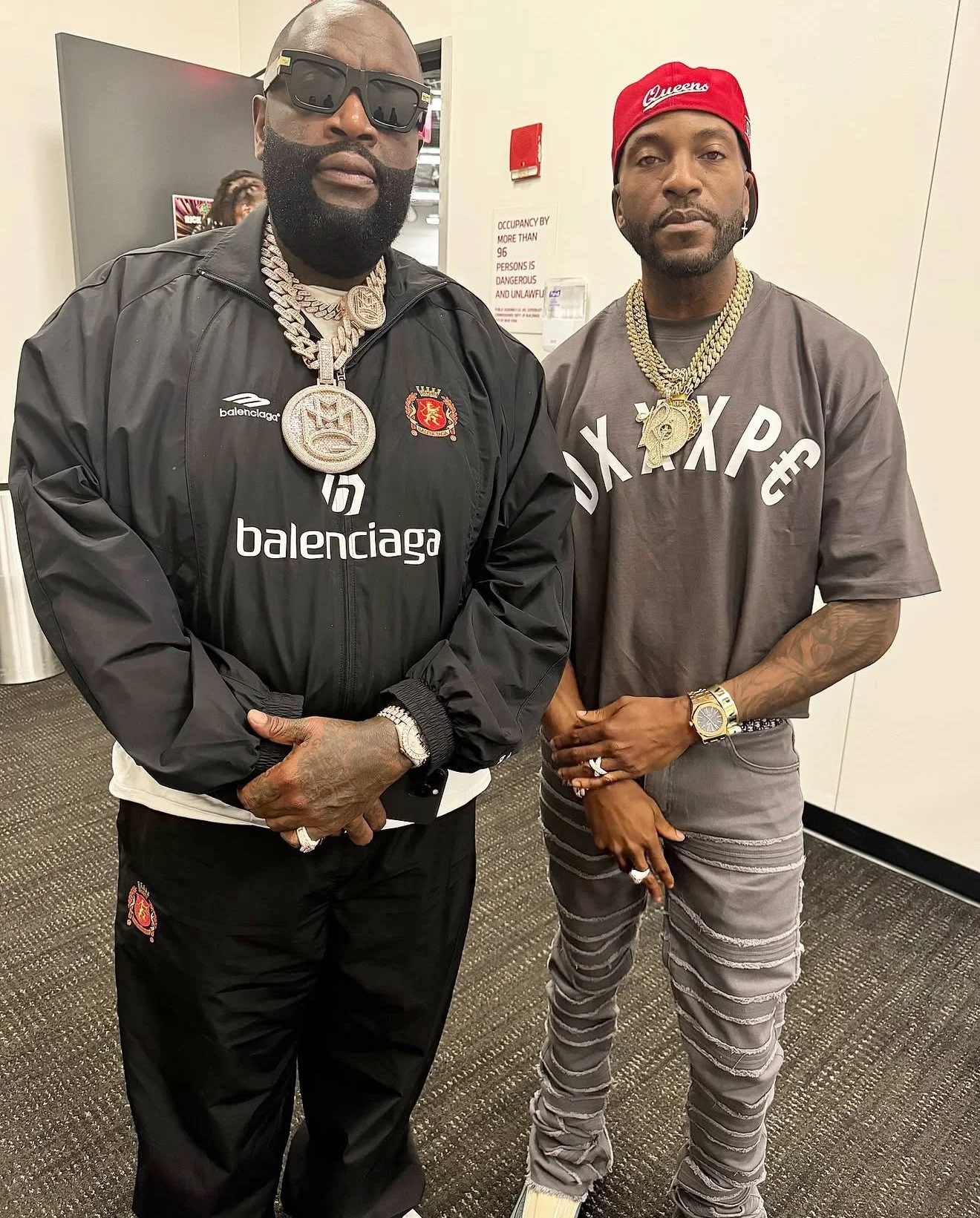
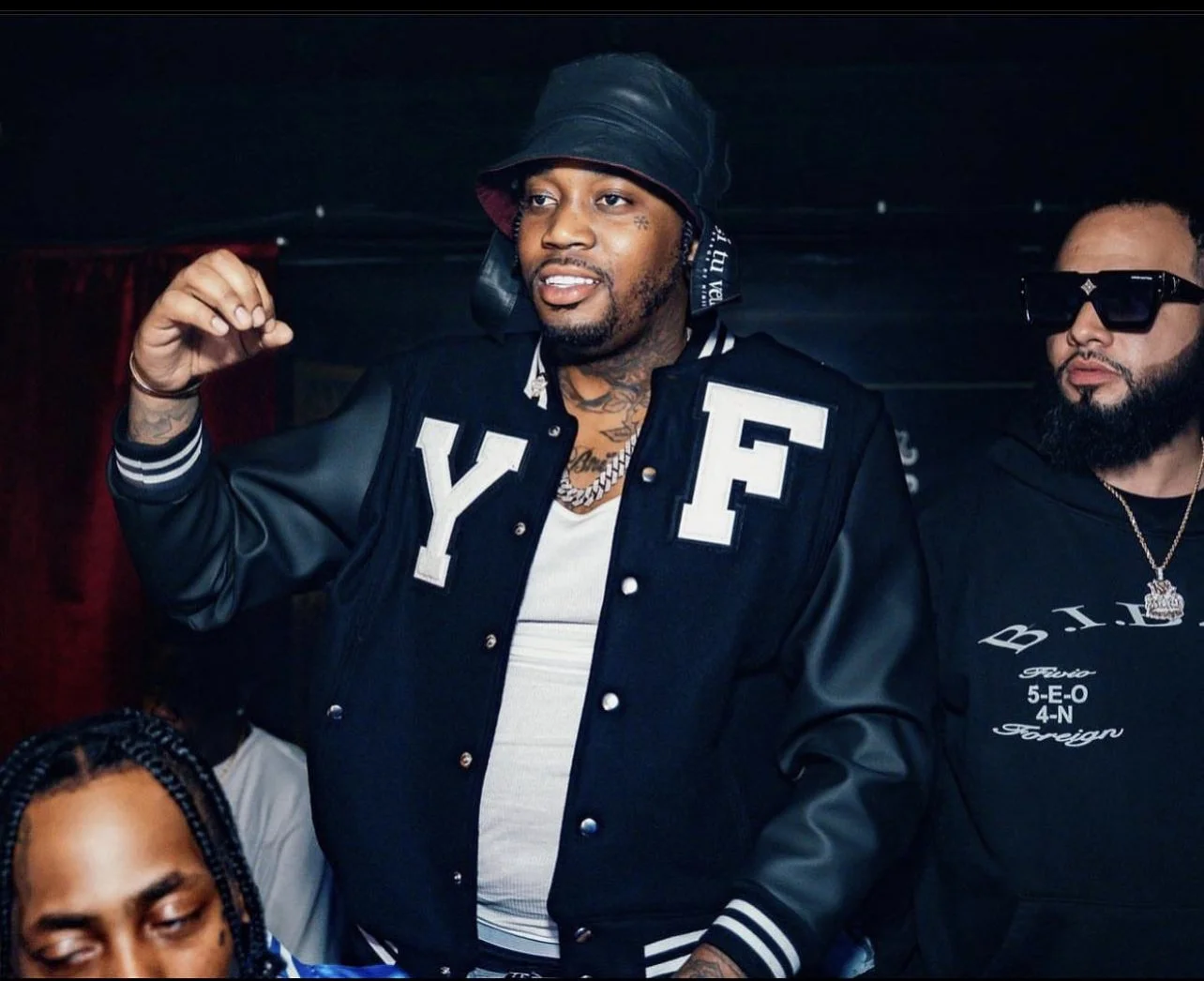
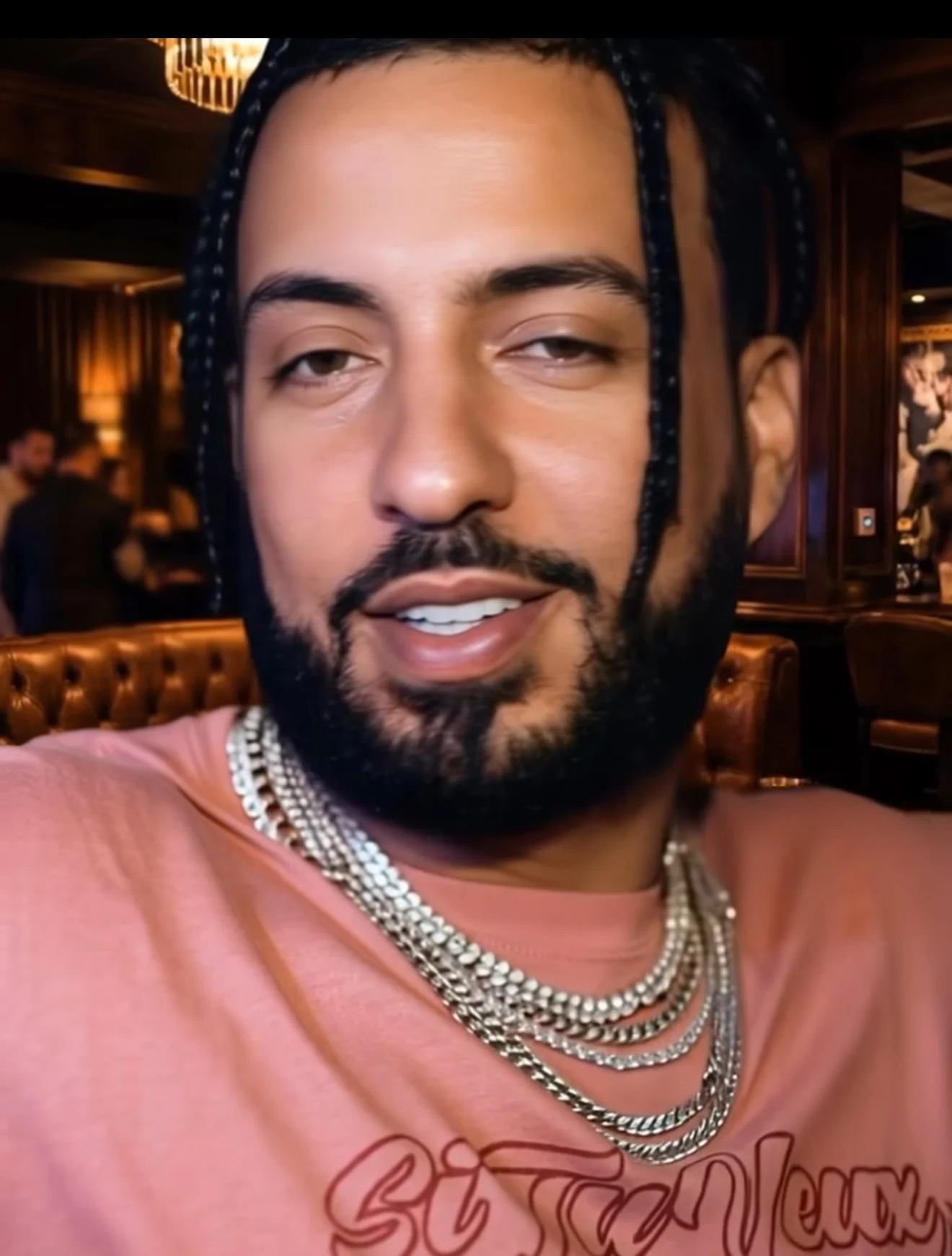
That is the context surrounding Moon's final look in New York.
She was not simply wearing a streetwear label with celebrity associations. She was stepping into a fashion history that has been developing alongside hip-hop for decades, while simultaneously representing a newer generation of artists who are expanding what that culture looks like internationally.
The image becomes particularly compelling because Moon brings another layer to that story. As a French-Korean rapper, she carries a cultural identity that does not sit neatly inside one geography. Her work exists within a global music landscape, while the look she wore in New York came from an American streetwear lineage deeply connected to the history of hip-hop.
There is something very New York about that collision.
Different cultures. Different generations. Different creative disciplines. One runway.
The Language of Hip-Hop Has Always Been Visual
Hip-hop has never been solely a musical genre. From its earliest days, it developed an entire visual language around the artist, and clothing became one of the clearest ways that language was communicated.
Long before luxury fashion houses began incorporating hip-hop references into their collections or building relationships with rap's biggest stars, rappers were already using fashion to establish identity, status, attitude, and affiliation. The clothes told audiences where an artist came from, who they were influenced by, what neighborhood or scene they represented, and how they wanted to be perceived. Streetwear became part of the mythology.
That relationship has only grown more complicated and more powerful with time. Today's rappers move between music, fashion campaigns, runway appearances, creative direction, brand ownership, and celebrity culture with very little separation between those worlds. Artists such as Cardi B, Moneybagg Yo, and Gunna exist in an environment where their influence is not limited to their records. Their clothes, collaborations, appearances, and visual identities all contribute to the culture surrounding their work.
Moon's appearance at The Musa Showroom belongs to that same continuum, but with her own cultural perspective.
She is not attempting to recreate the hip-hop fashion history that came before her. She is arriving inside it as herself.
That distinction is important because cultural lineage does not require imitation. Sometimes it simply requires showing up, understanding the significance of the room, and having enough presence to add something to what came before.
The Stylist Collective Makes the Connection
The final look came through The Stylist Collective, placing another layer of creative collaboration between Moon and Doctrine Denim. The Collective represents the increasingly fluid role of the stylist within contemporary fashion, where styling is no longer simply about assembling an outfit but about creating an entire visual language around a person, a brand, or a cultural moment.
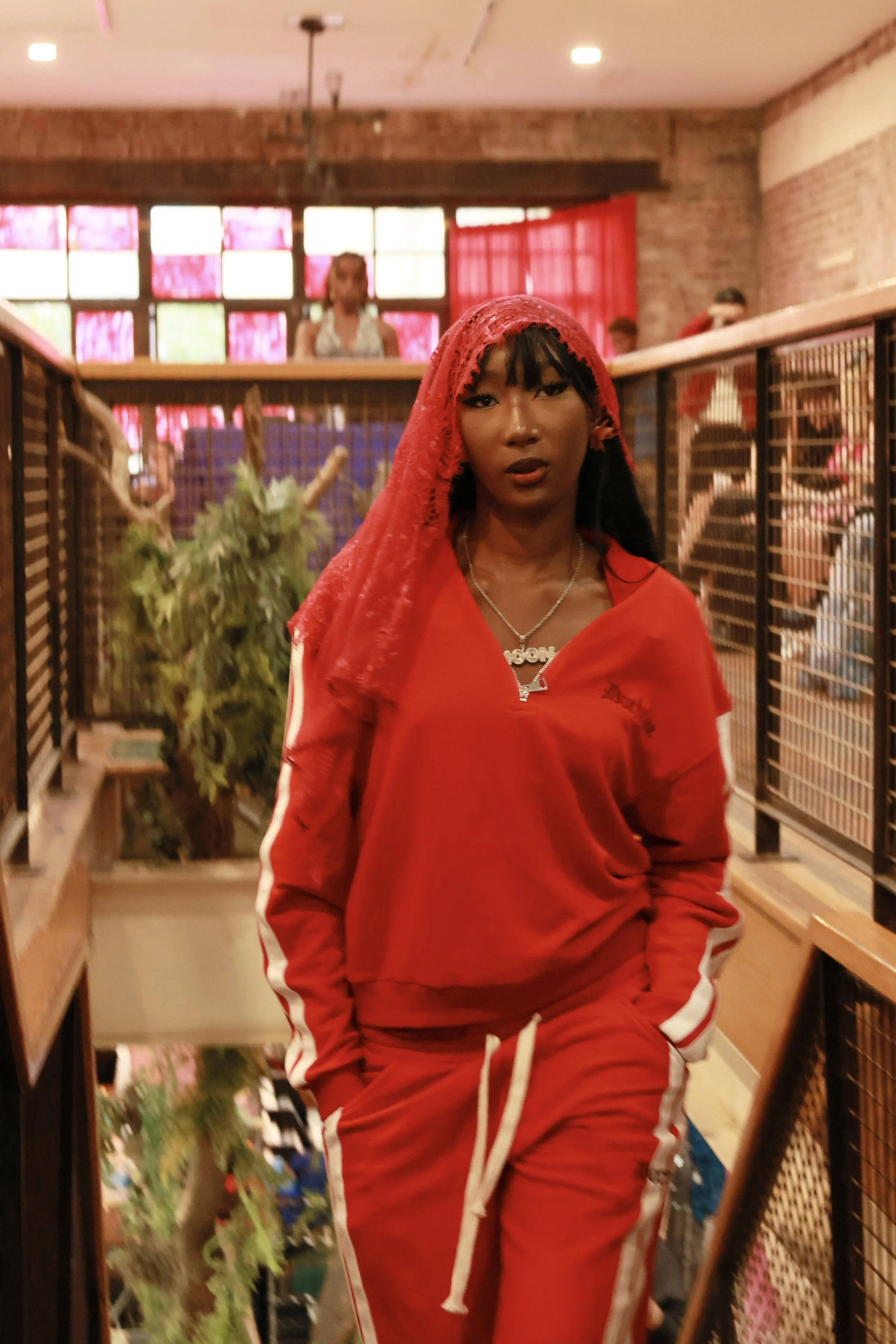
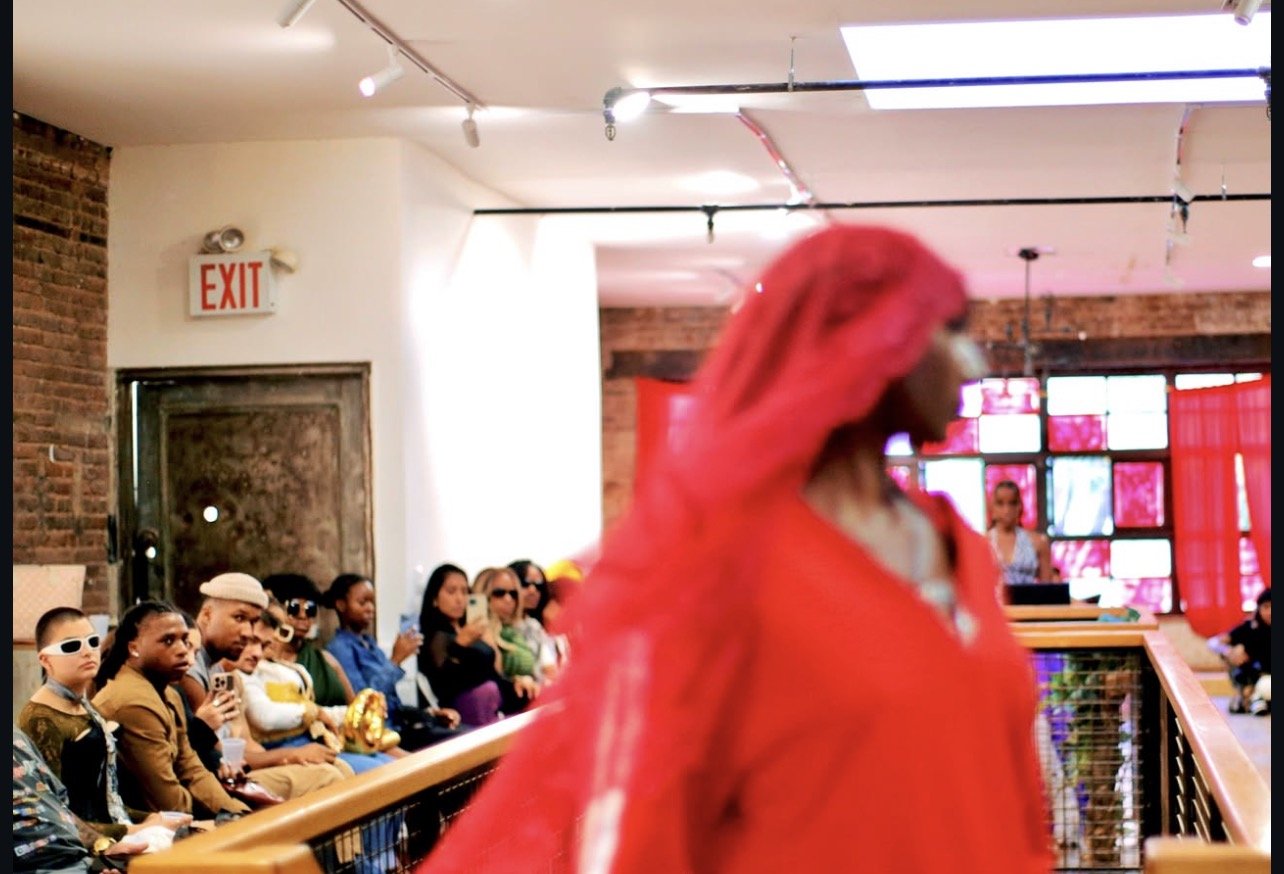
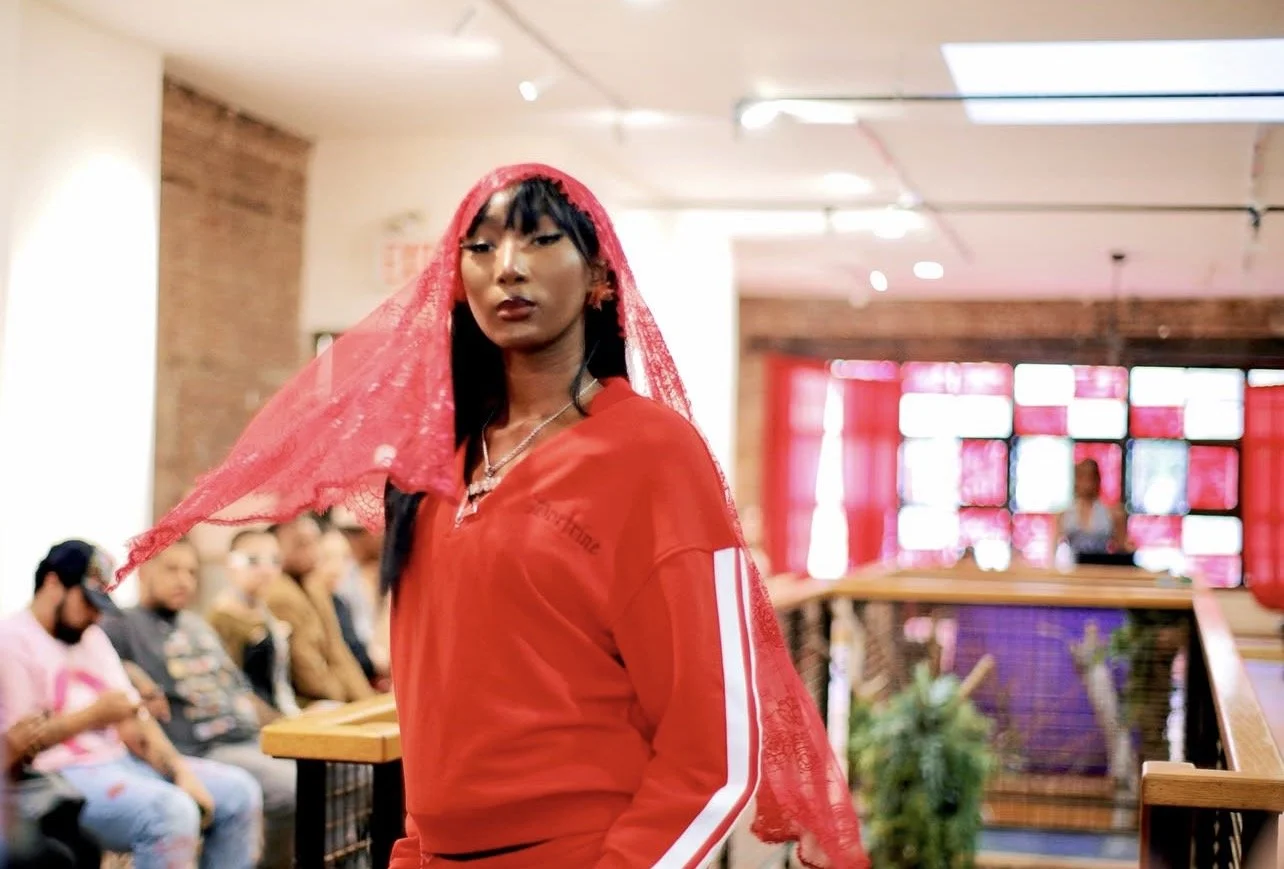
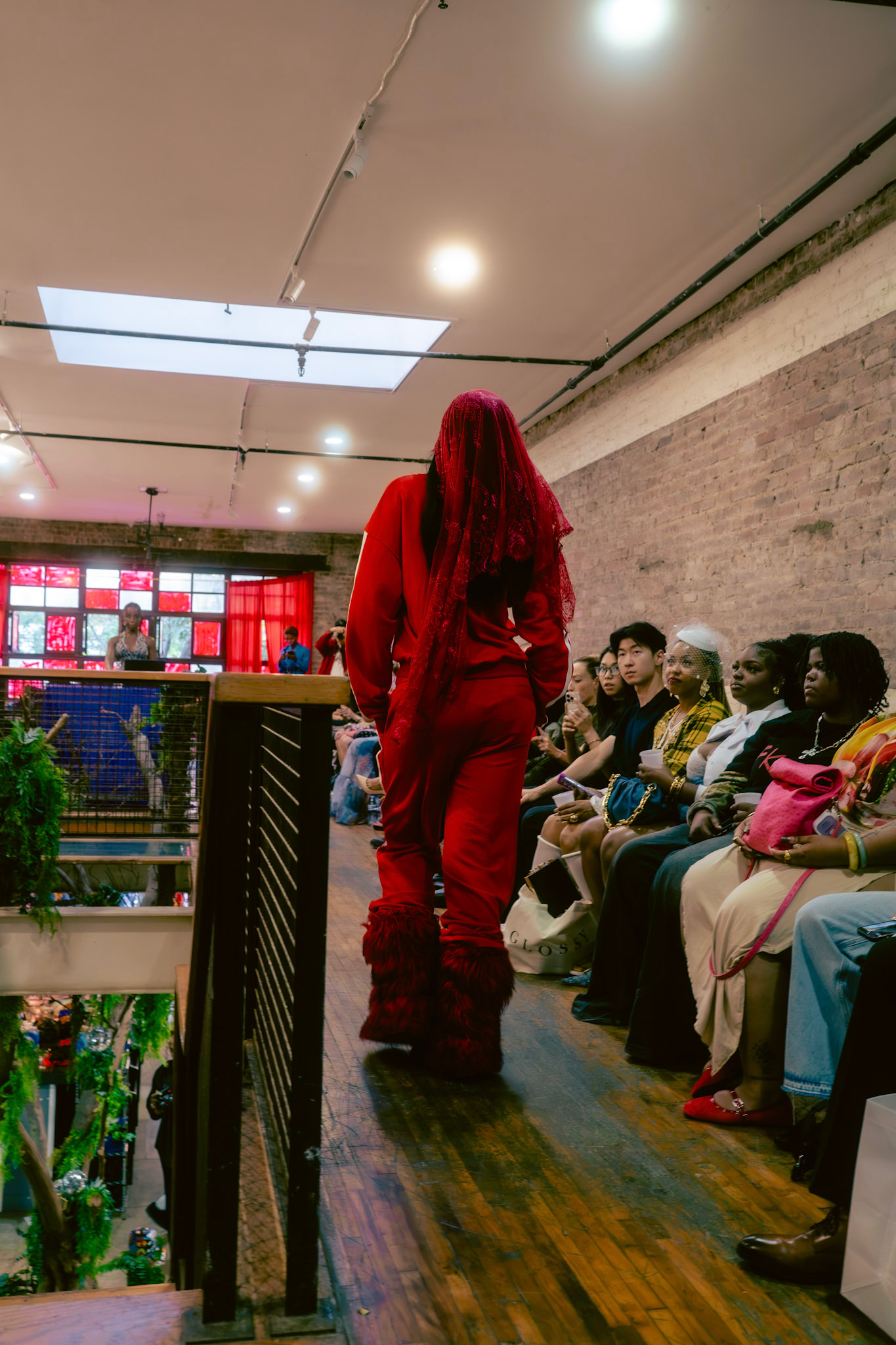
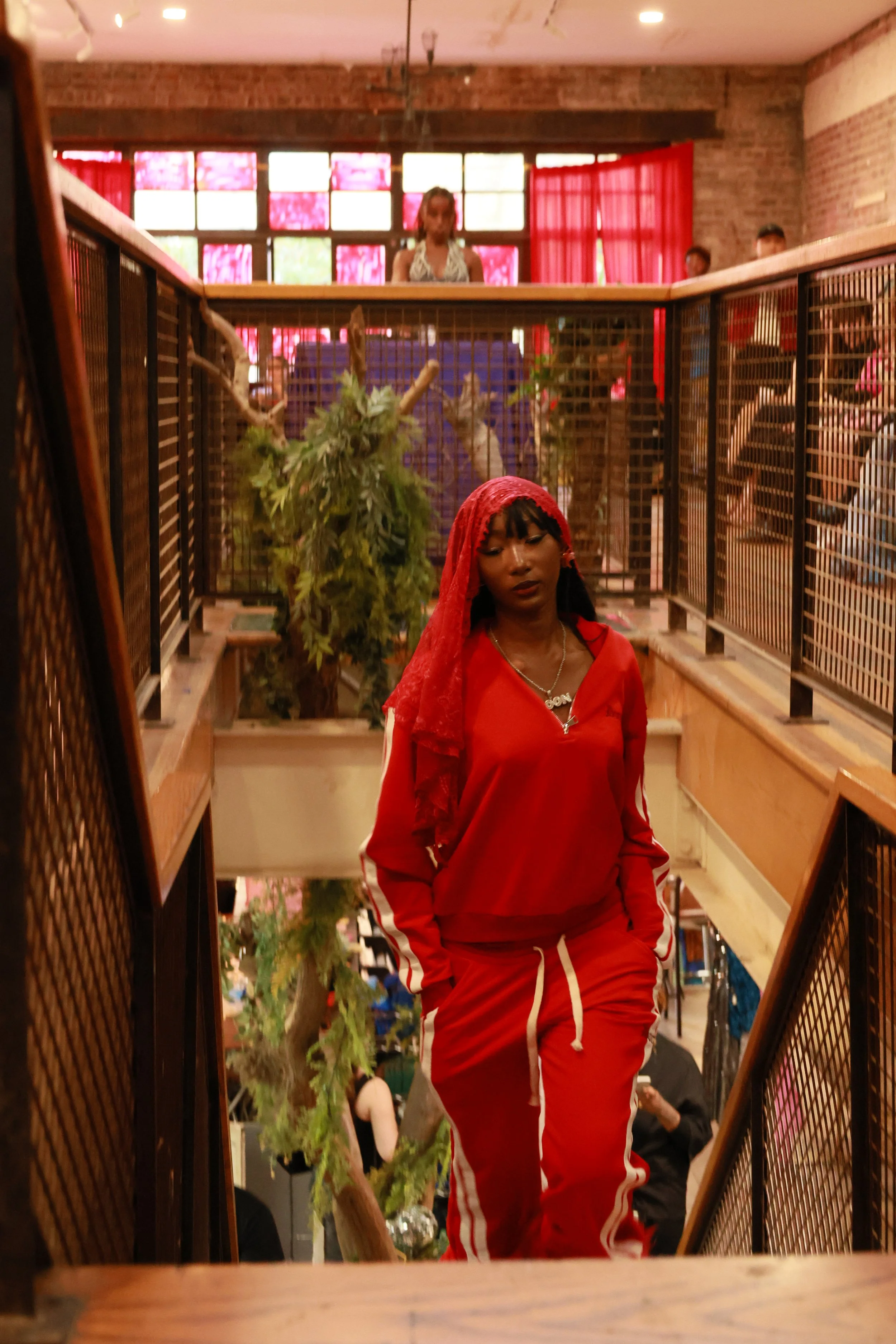
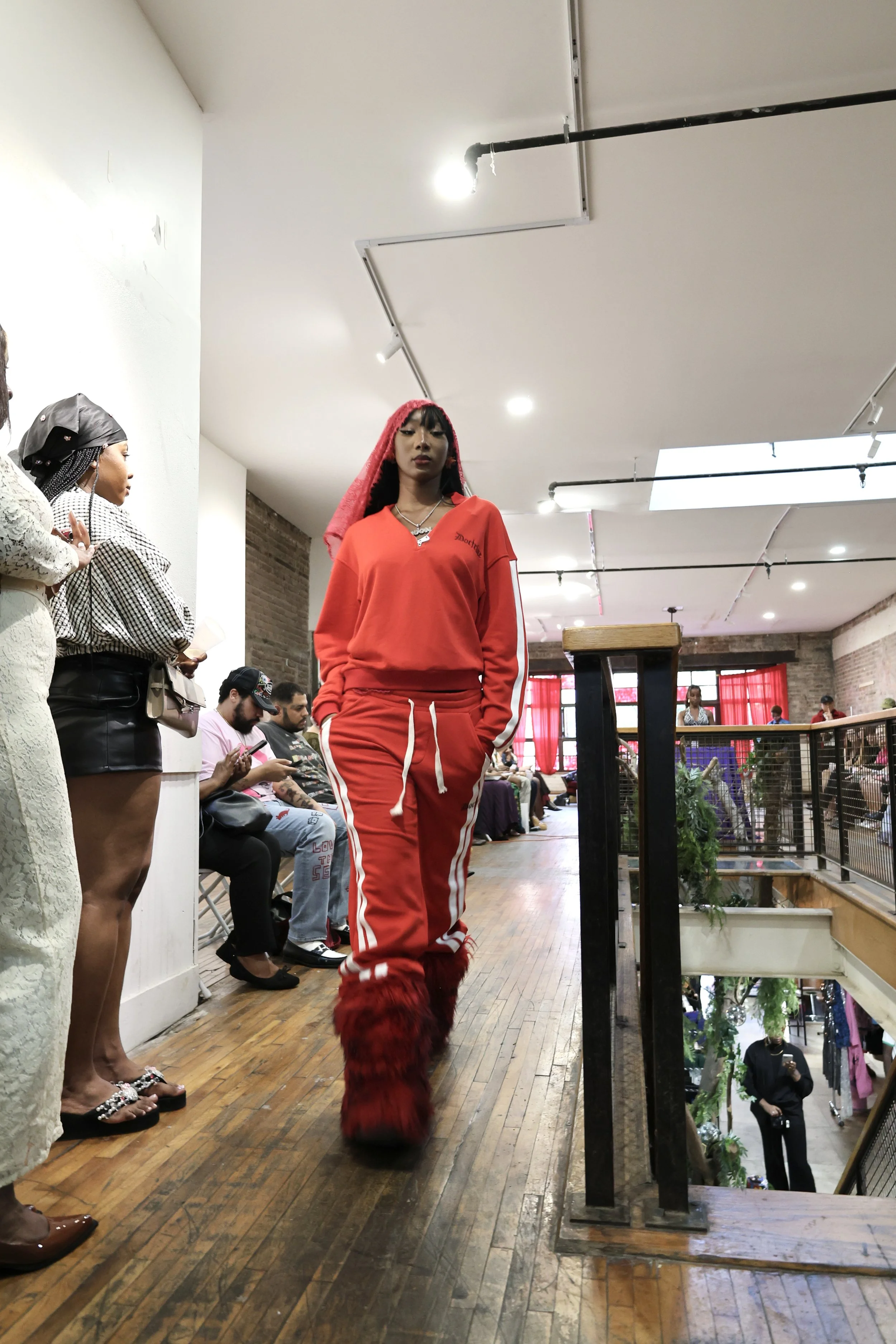
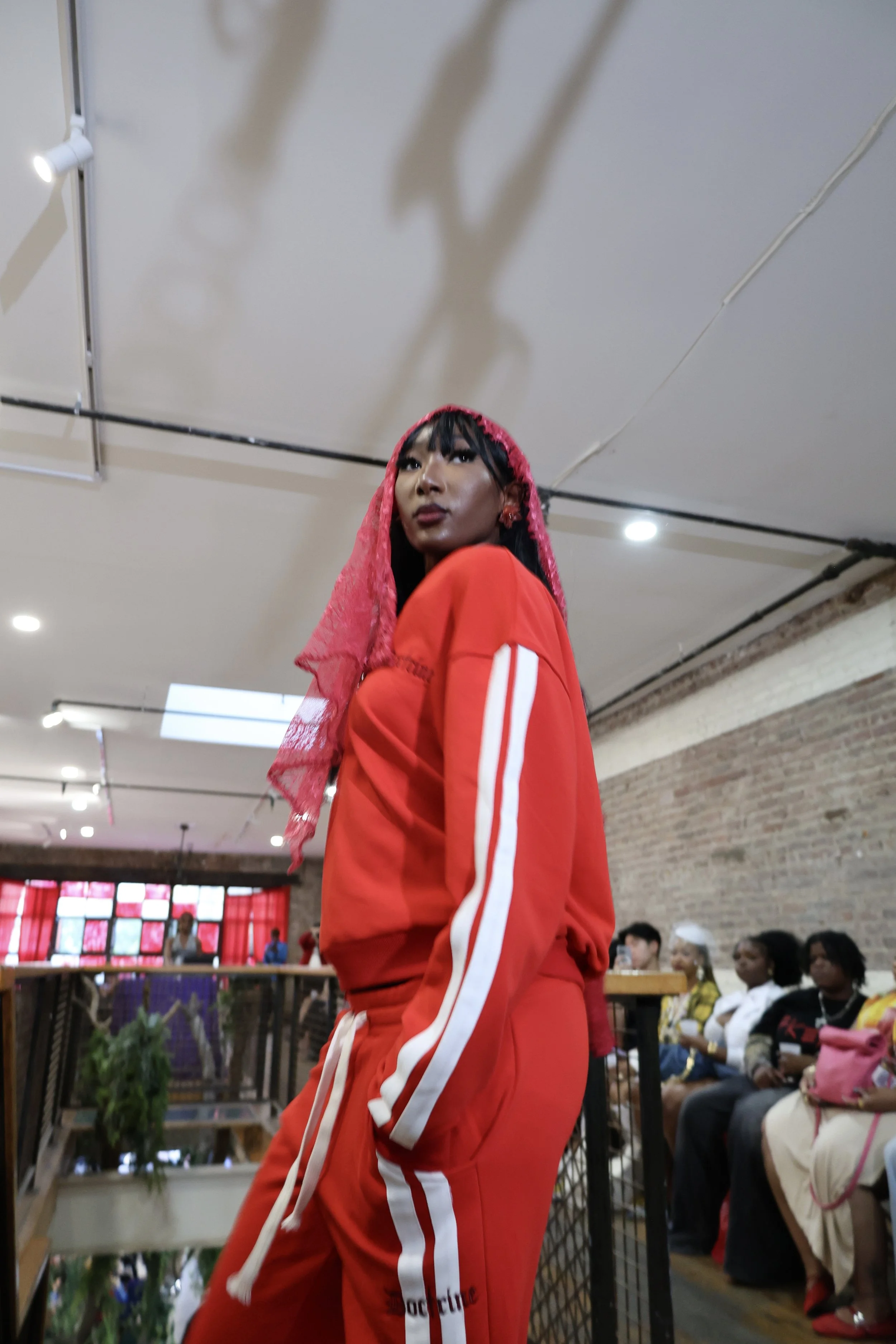
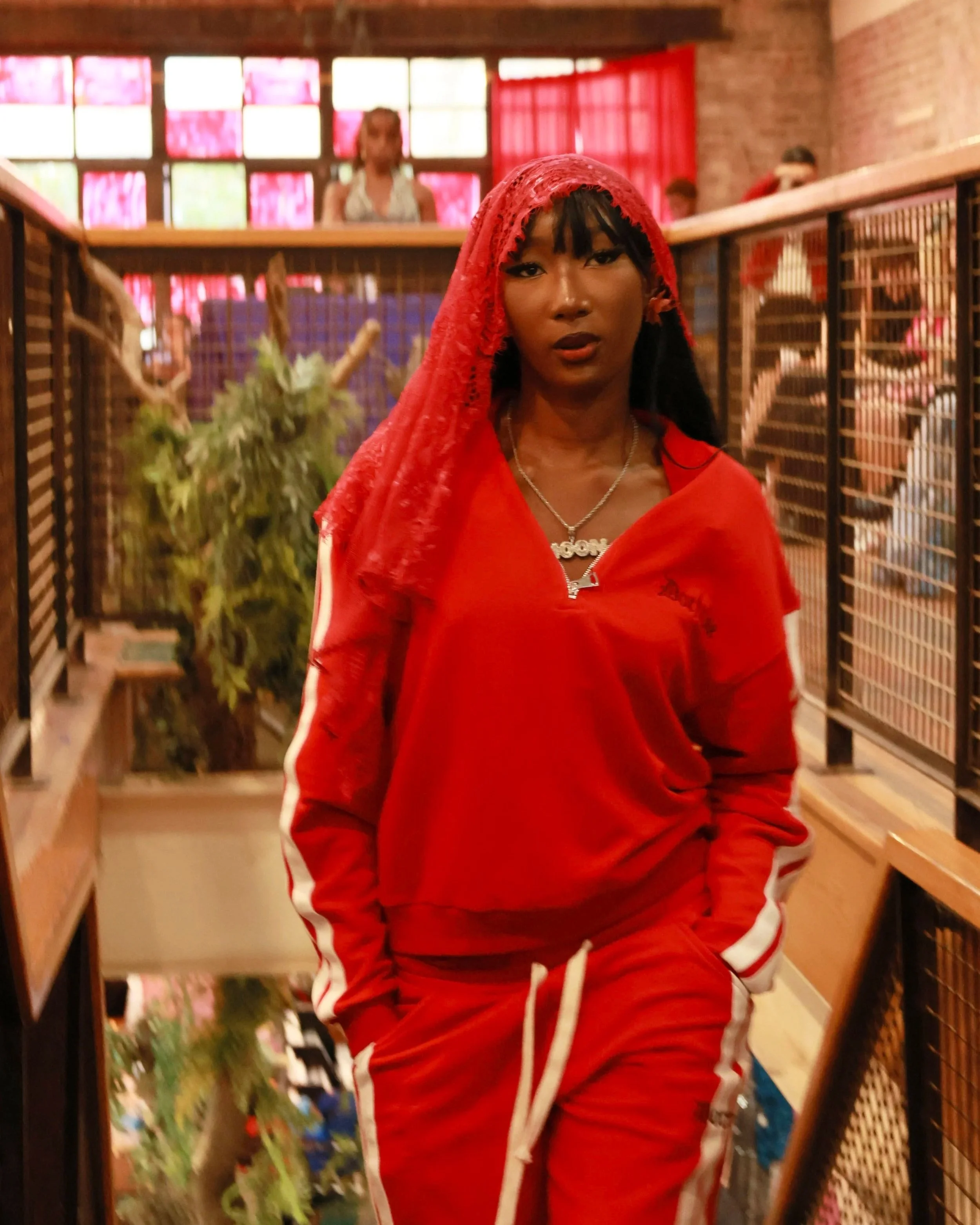
That made Moon's appearance feel less like a conventional celebrity placement and more like an actual fashion collaboration.
The look had to work on a runway, but it also had to belong to Moon. It needed to carry the visual history of Doctrine without overwhelming the artist wearing it. Most importantly, it needed to make sense within the world The Musa Showroom was creating that evening.
It did.
Moon's appearance demonstrated the kind of exchange that happens when fashion is allowed to interact with music without forcing one discipline to perform as the other. The rapper remains a rapper. The stylist remains a stylist. The brand remains rooted in its own history. The runway simply becomes the place where those worlds meet.
That is where the most interesting Fashion Week moments tend to live.
Red, From Head to Toe
Moon was already giving runway before anyone asked her to walk one. She arrived in head-to-toe red wearing a lace mini dress, fur boots, an iced-out Moon necklace, and a delicate lace head covering that landed somewhere between ecclesiastical drama and East Asian-inspired styling. The silhouette was romantic, a little dangerous, and very much in control.
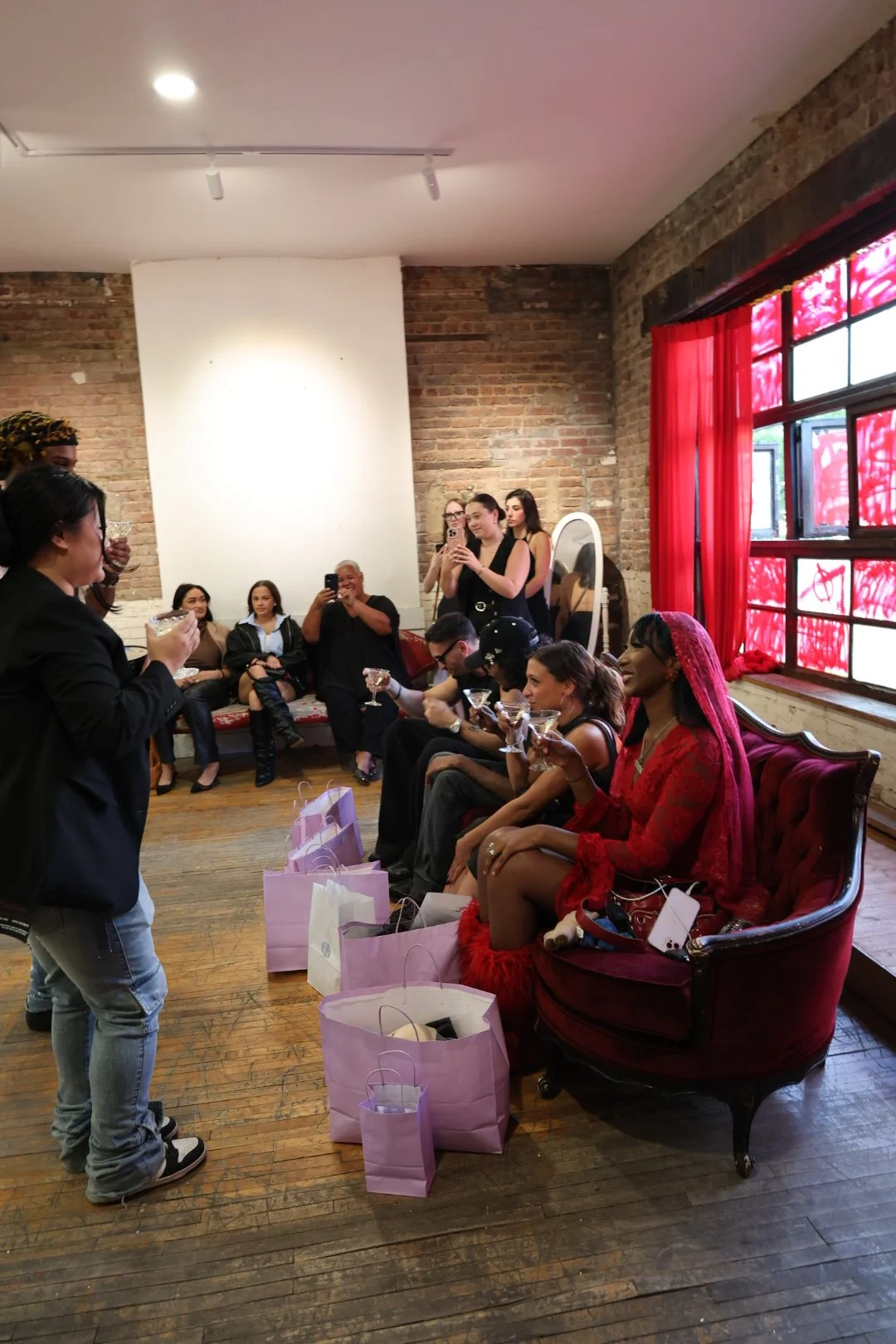
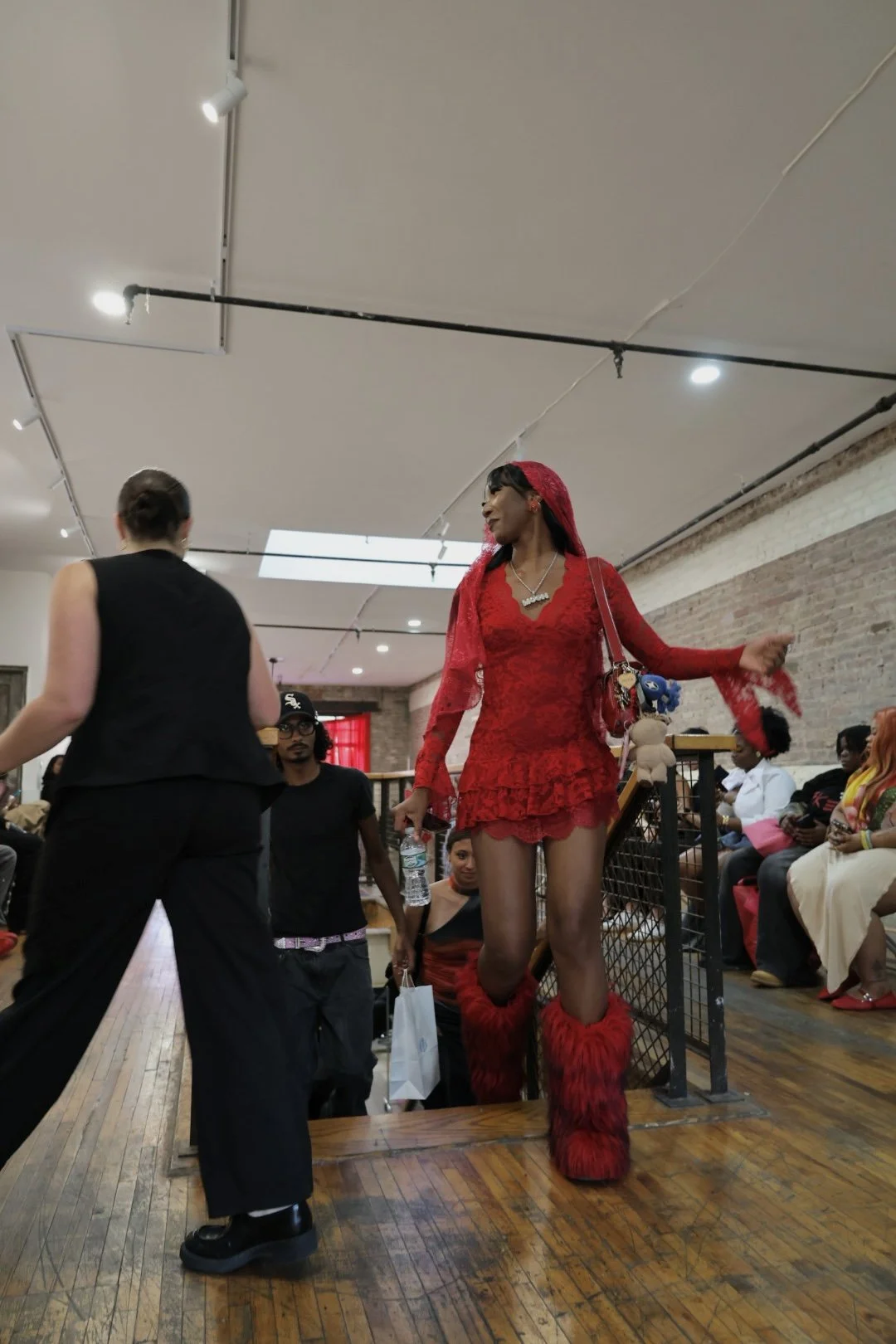
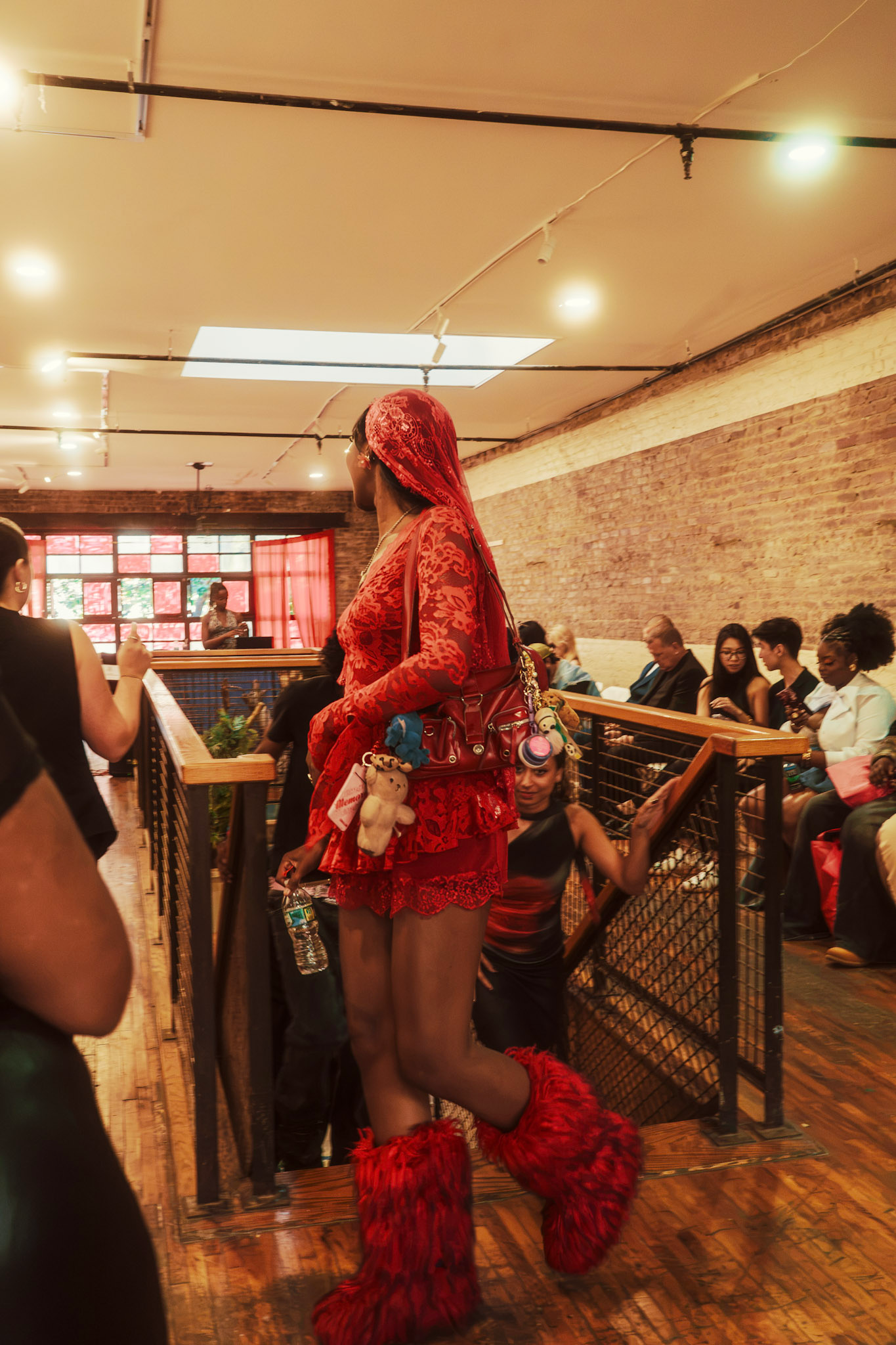
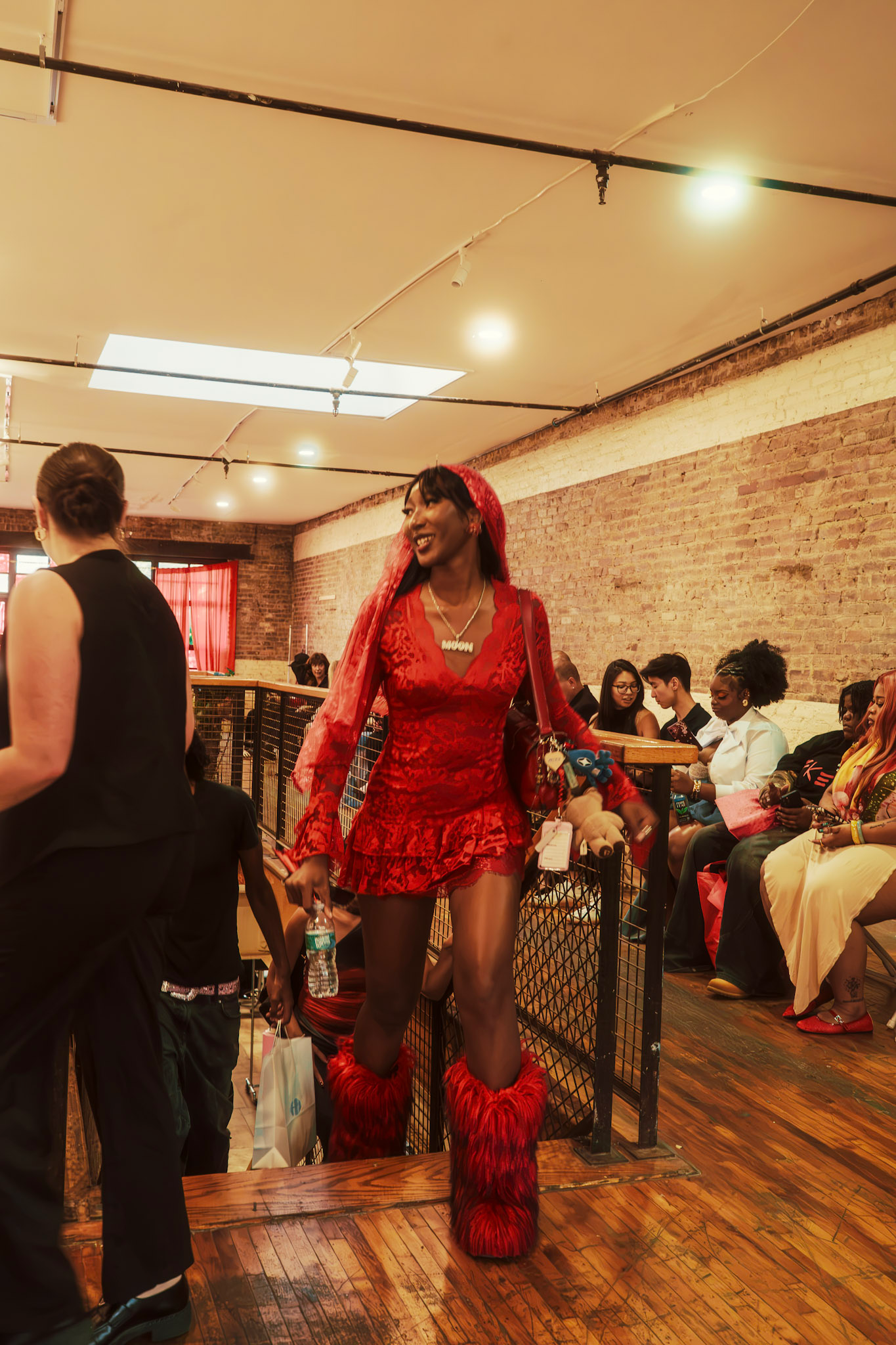
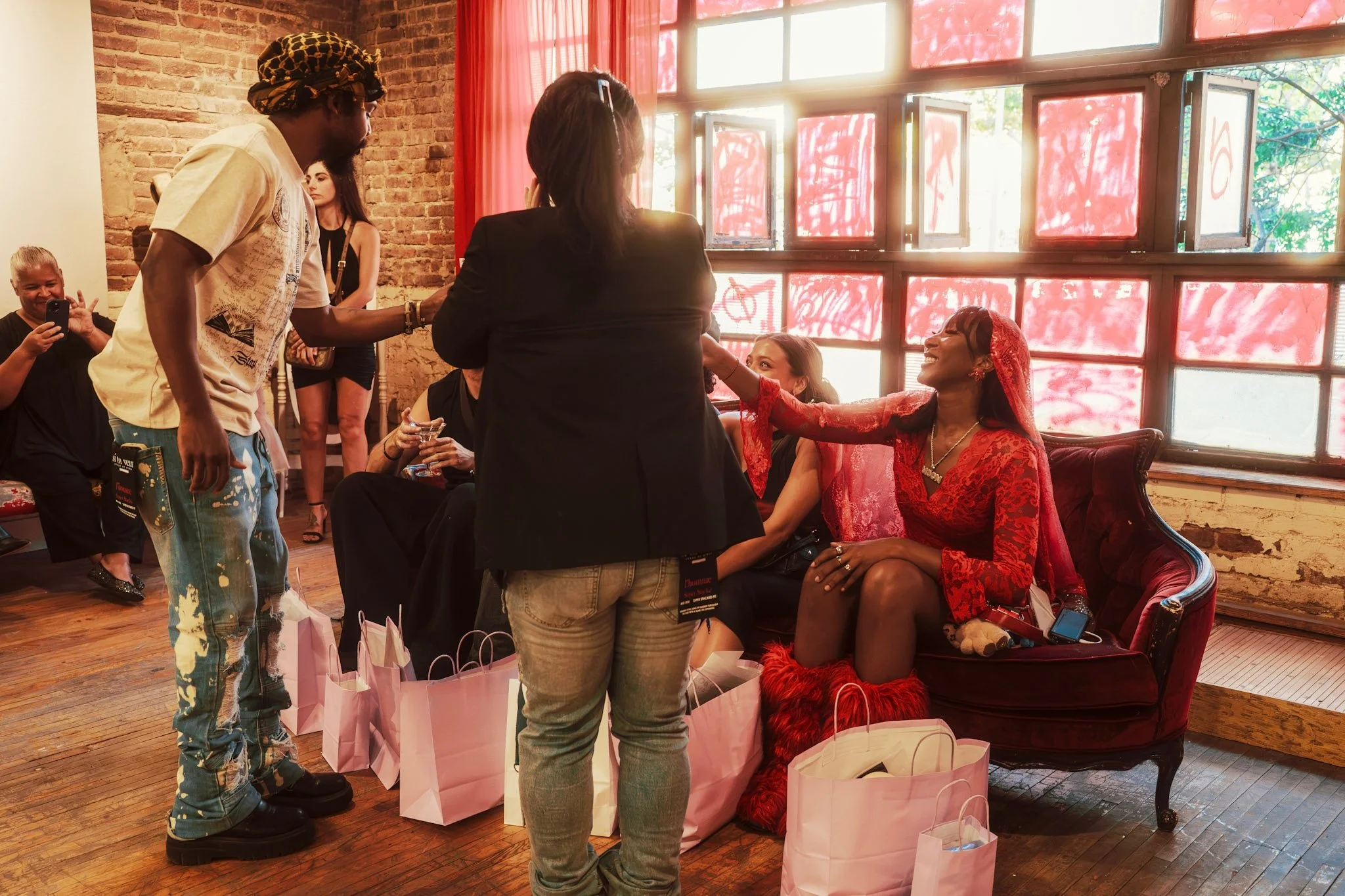
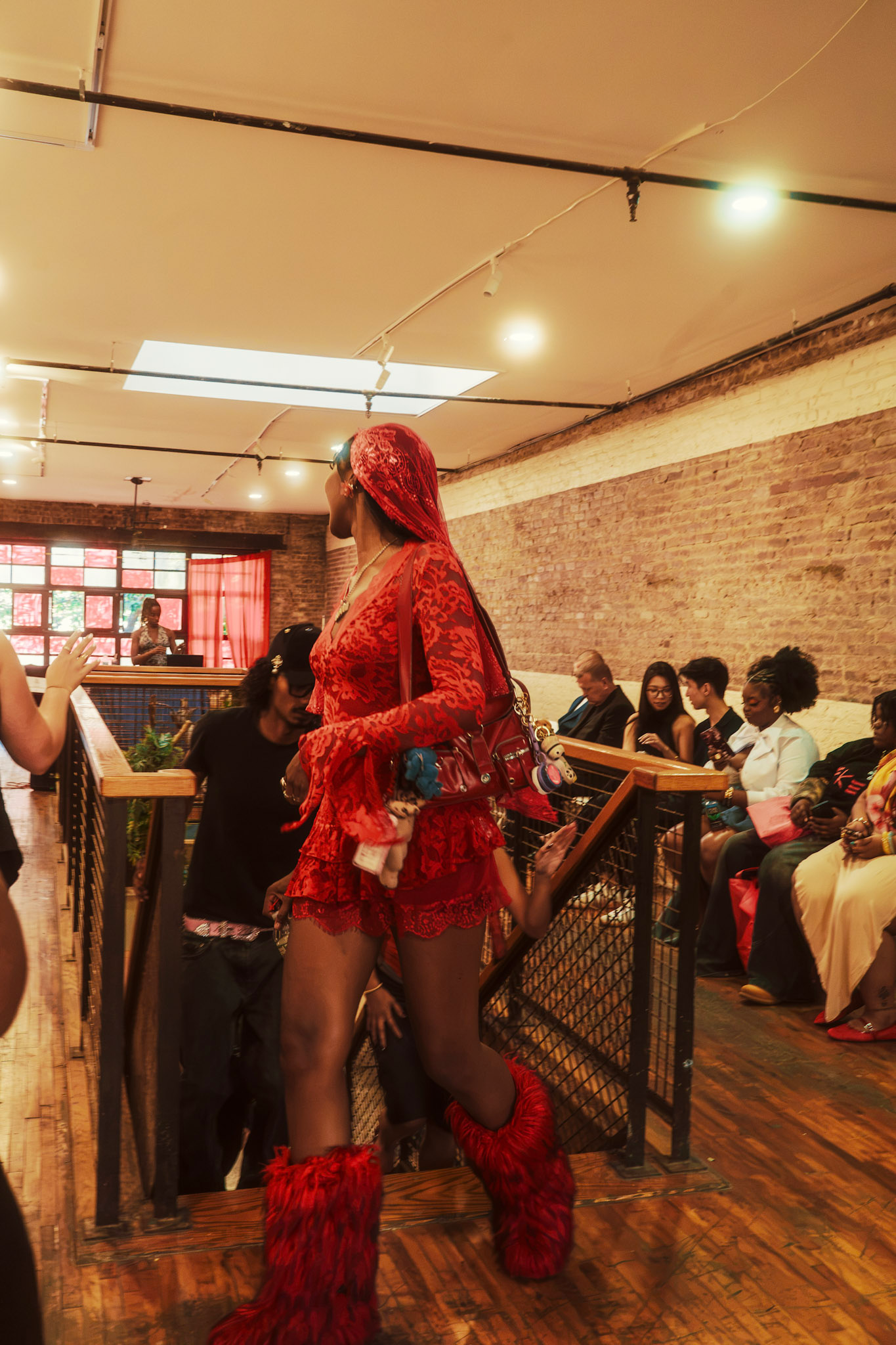
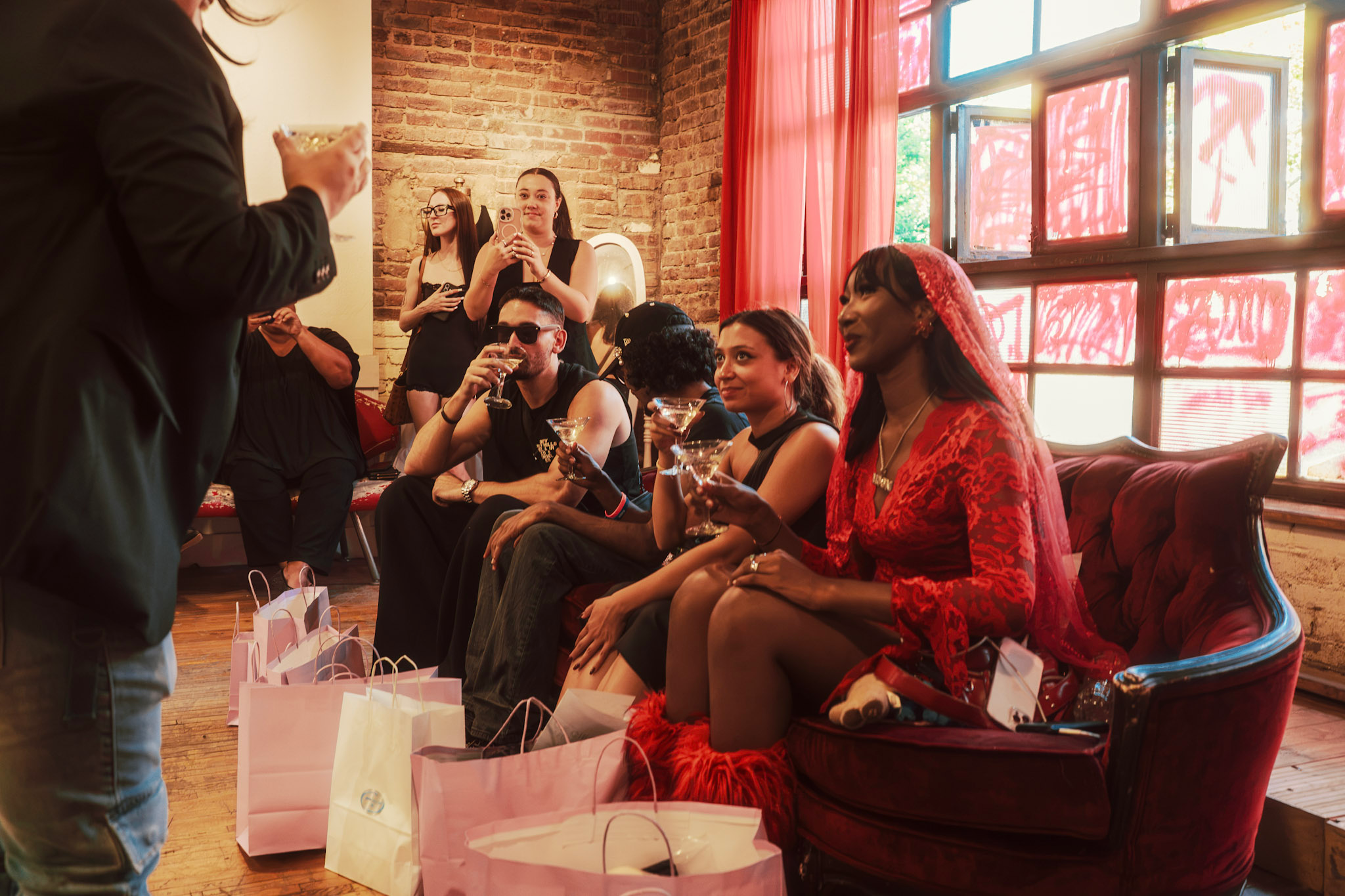
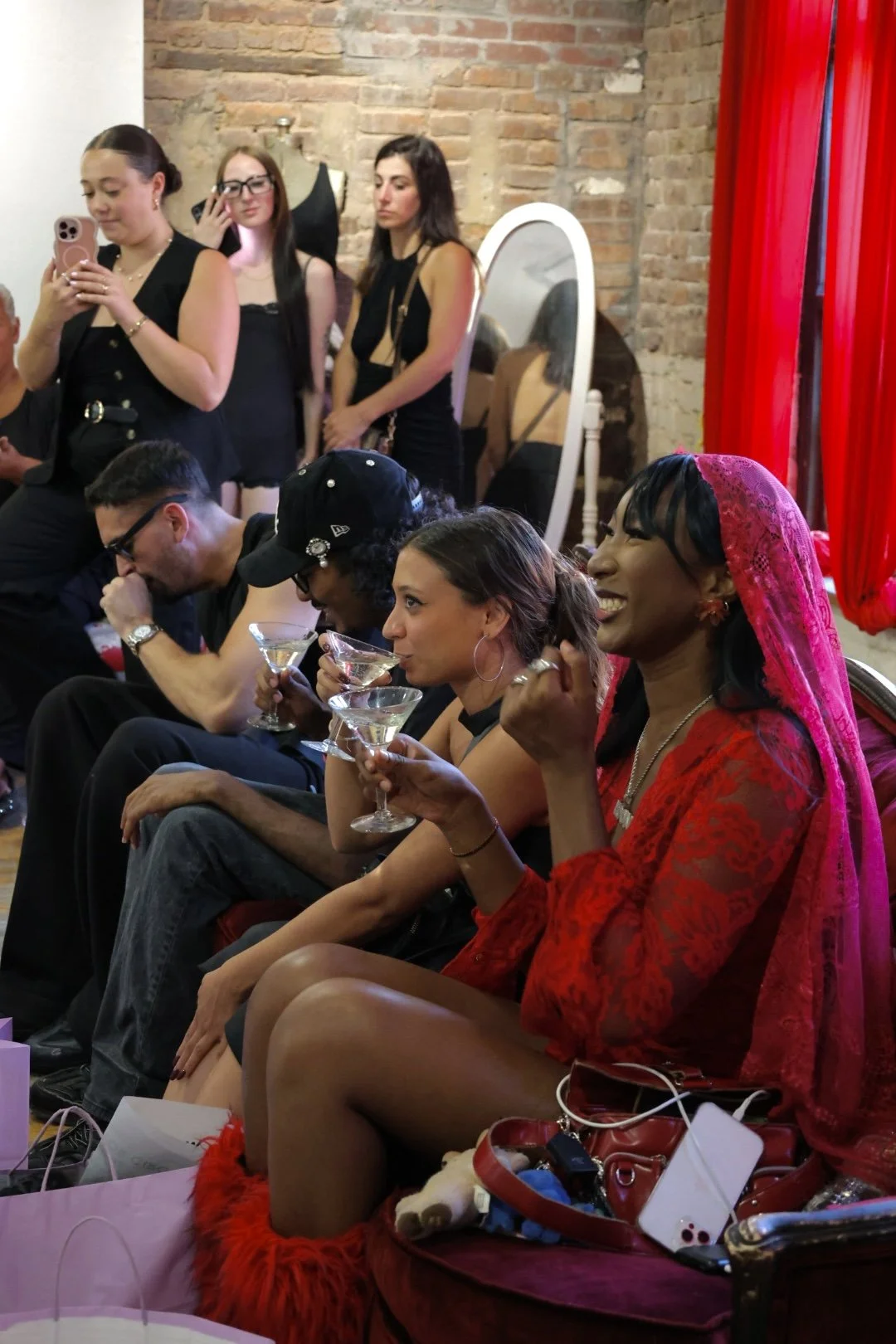
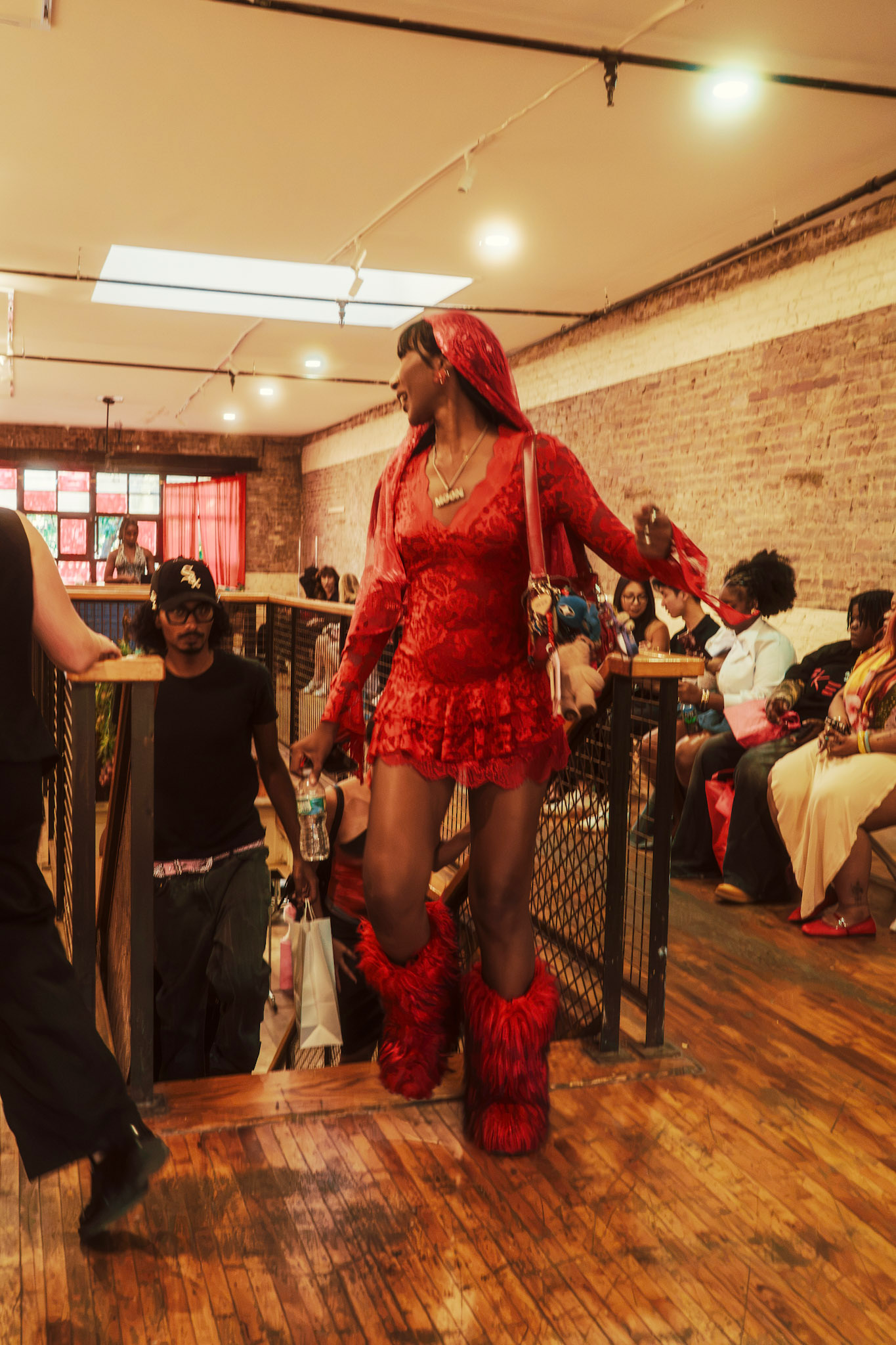
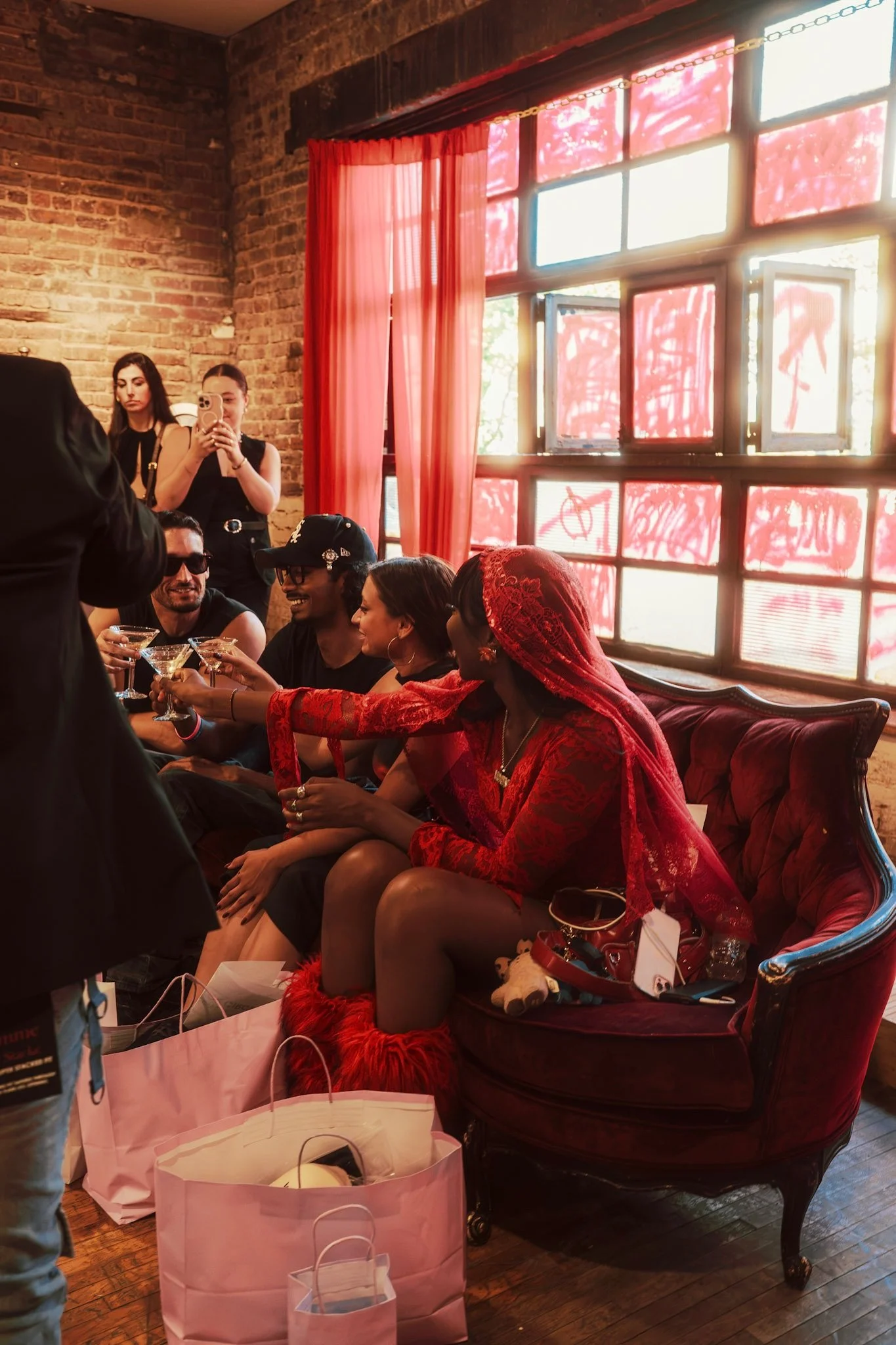
Even before Moon stepped onto the runway, the look had already announced itself.
She arrived in a head-to-toe red ensemble that felt equal parts ceremonial, sensual, and unmistakably editorial. A lace head covering framed her face with the delicate drama of an ecclesiastical veil, creating a silhouette that felt almost convent-inspired without losing any of the attitude expected from a rapper arriving at New York Fashion Week. Around her neck, an iced-out Moon necklace caught the light, turning her name into part of the styling rather than simply a signature. A lace mini dress kept the look flirtatious and deliberately unapologetic, while fur boots grounded the entire silhouette with a dose of excess.
The color did much of the talking. Red from head to toe gave the look a visual intensity that was impossible to ignore, while the combination of lace, fur, jewelry, and the sculptural head covering created a tension between delicacy and power. It felt romantic without becoming precious, glamorous without looking overly rehearsed, and distinctly suited to the kind of woman who can walk into a room and make the room adjust itself around her.
There was also a clear East Asian-inspired sensibility in the styling, particularly in the relationship between the head covering, the framing of the face, the intricate lace, and the controlled silhouette. Rather than treating cultural influence as a costume or an obvious reference, the styling incorporated those visual cues into a contemporary Fashion Week look that still felt entirely like Moon. The result was a look that could have existed in a fashion editorial on its own before the runway ever entered the equation.
And then there was the fact that Moon was wearing red.
There are colors that photograph well, and then there are colors that enter a room before the person wearing them does. This was the latter. Against the darker palette of the event, the look had the kind of immediate visual authority that makes photographers turn their cameras before anyone has asked them to.
So when Moon eventually appeared on the runway, she was not suddenly transformed into a fashion moment.
She already was one.
The surprise was simply that she was going to walk
A Room Built Around Cultural Exchange
For The Musa Showroom, the moment also reflected the larger intention behind the New York presentation. The showroom was not designed to create another isolated fashion environment where designers present collections to a room of people who already know exactly where they belong. Its premise is rooted in bringing culture into spaces that have historically treated access, luxury, and fashion as separate conversations.
That is why the Creator Circle matters.
Moon and her team were not simply placed somewhere in the VIP section as decorative guests. They were part of a larger creative ecosystem that included the people producing the show, the brands participating in it, the stylists shaping the presentation, and the creators documenting and interpreting what was happening around them.
The result is a more accurate reflection of how contemporary fashion actually moves.
A rapper can influence a stylist. A stylist can introduce an artist to a designer. A designer can pull from music culture. A creator can turn an in-person moment into a global image within minutes. A showroom can become a meeting point for all of them.
The traditional boundaries are becoming less useful, and The Musa Showroom has little interest in pretending otherwise.
Moon's New York Moment
By the time Moon reached the end of the runway, the significance of the appearance had become bigger than the surprise itself.
She had arrived in New York as a French-Korean rapper attending Fashion Week with her team. She had been hosted through the Musa Creator Circle, experienced the event from the VIP environment, and then unexpectedly crossed the boundary between audience and runway. In the final look from The Stylist Collective featuring Doctrine Denim, she became the closing image of the presentation.
That image carries several stories at once.
There is Moon, representing a generation of artists whose identities move effortlessly across borders. There is Doctrine Denim, connected to a Modernbrands Group history that reaches into the formative years of hip-hop fashion and continues through today's most visible rap artists. There is The Stylist Collective, translating those influences into a contemporary runway language. And there is The Musa Showroom, creating the environment where those different pieces can occupy the same room without needing to flatten themselves into one aesthetic.
None of those elements needed to be forced together.
They simply needed the room to happen.
And New York gave them one.
But New York Was Not the End
For all the spectacle surrounding Fashion Week, the best moments often leave you with the feeling that you have only seen the beginning of something.
Moon's runway appearance was one of those moments.
The New York show closed, the final look left the runway, and the room moved on to the next event in the endless Fashion Week calendar. But the collaboration between Moon, Doctrine Denim, The Stylist Collective, and The Musa Showroom is not ending in New York.
There is another city waiting.
For Paris Fashion Week, Moon will reunite with The Musa Showroom and perform at the Paris event, bringing the same collaboration with Doctrine Denim back into the story.
And that is where the whole thing becomes beautifully circular.
A French-Korean rapper arrived in New York and unexpectedly closed a show in a streetwear look connected to decades of American hip-hop history. She will now carry that collaboration back across the Atlantic to Paris, where her French identity gives the story an entirely different sense of place. What began as a surprise appearance in New York becomes something closer to a homecoming when she returns to Paris not simply as a guest, but as a performer.
New York gave Moon the final walk.
Paris gets the next chapter.
And this time, she will have the microphone.